


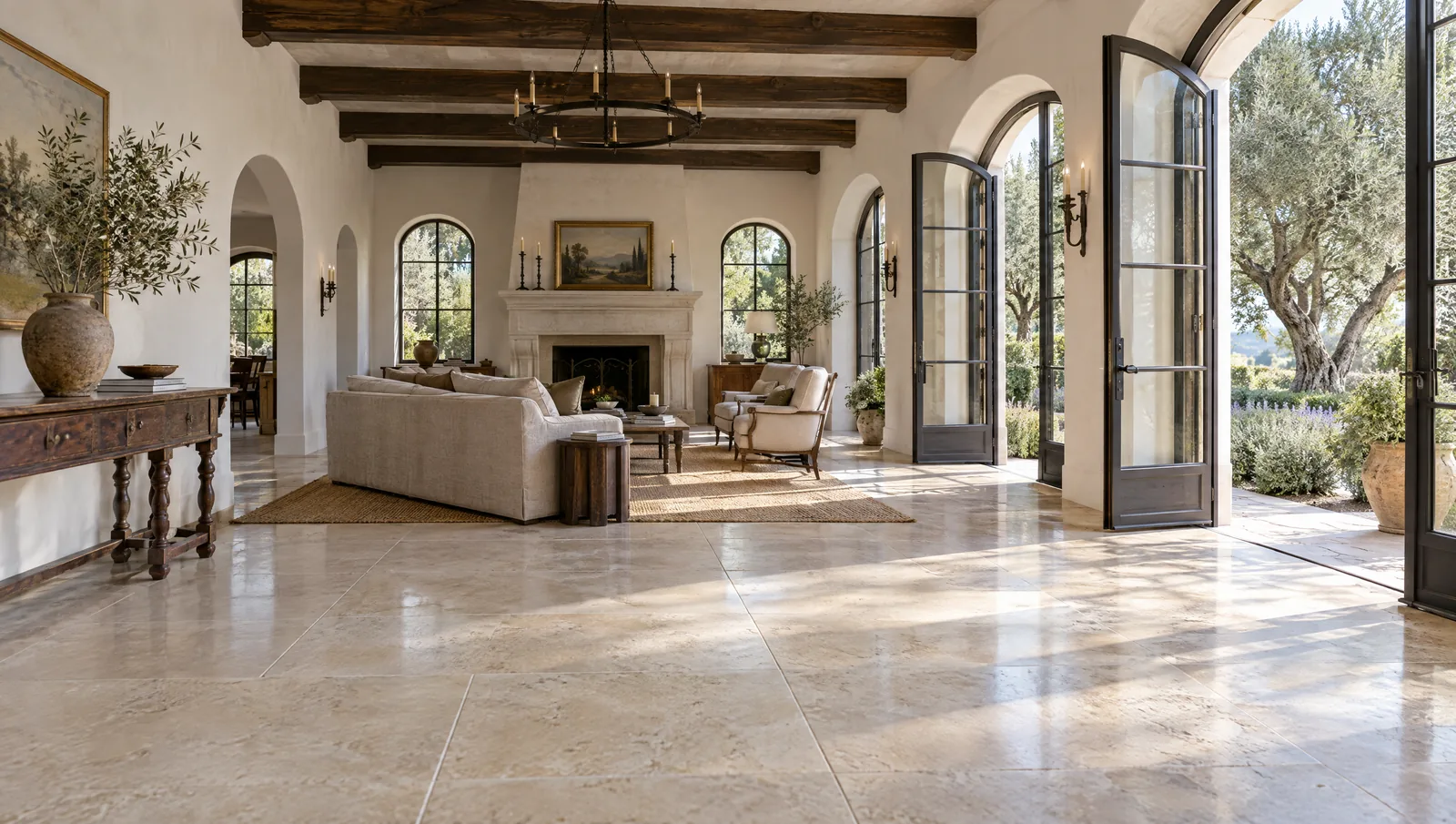
Natural stone cleaning and sealing
Natural stone is porous, and much of it reacts with acid. The wrong cleaner can etch it, strip its sealer or leave a film that traps dirt. We identify your stone first, clean it with products chosen for it, treat stains at the source and seal with a penetrating sealer matched to its porosity.
When to call us
- Stone that looks dingy, patchy or darker in the traffic areas
- Spills that soak in and darken the stone within minutes
- Oil, coffee, wine, rust or pet stains
- Haze or a sticky film from household cleaners
- Dark, dirty grout between stone tiles
- Slate or flagstone that has lost its depth of color
Identify the stone, then choose the method
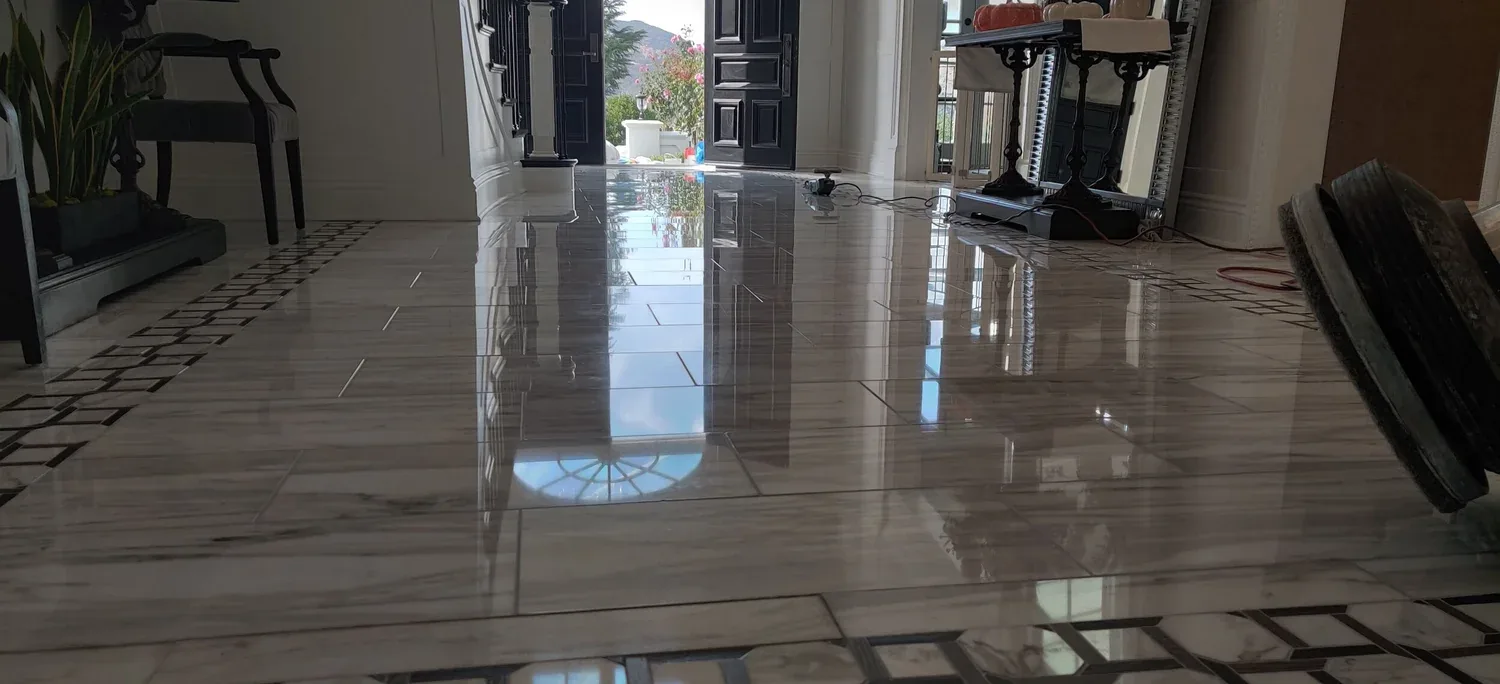
The Natural Stone Institute groups stone into two broad families. Calcareous stones, including marble, limestone, travertine, onyx and most Jerusalem stone, are made of calcite or dolomite and etch on contact with common acids. Siliceous stones, including granite, quartzite and most sandstone, are made mostly of silicate minerals and resist household acids, though they can still absorb oils and stain. Slate sits in between: it is largely quartz and mica, but many slates contain some calcite, so we treat it with care.
That difference decides everything we do. A cleaner that is perfectly safe on granite can etch a limestone entry. So before any product touches your floor, we identify the stone and its finish and test a small, inconspicuous area.
Deep cleaning without damage
We use pH-appropriate stone cleaners and controlled agitation to release embedded soil from the surface and the grout, then rinse and recover the dirty water with extraction equipment. On textured stone such as slate and cleft flagstone, that means working the cleaner into the clefts where mops never reach. On honed and polished stone, it means gentle methods that clean without dulling the finish. Adjoining rugs, walls and furnishings are protected throughout.
Stain treatment with poultices
A stain is something that has soaked into the stone, so surface cleaning cannot reach it. For those, we use a poultice: an absorbent paste mixed with a chemistry suited to the stain, applied over the mark, covered and left to dwell. As it dries, it draws the staining material up and out of the stone. Oil-based stains, organic stains from coffee or leaves, and some water marks often respond well. Some deep or very old stains need more than one application, and a few can be lightened rather than fully removed. We will be clear with you about which is which.
Sealing that fits the stone
Most stone sealers are more accurately called impregnators. They penetrate below the surface and line the pores so liquids are absorbed more slowly, while still letting the stone breathe. A standard penetrating sealer does not add shine and is designed not to change the color. Some homeowners prefer a color-enhancing sealer on slate or darker stone to deepen its tone, and we can show you a test area so you can decide.
Not every stone needs the same treatment. Dense granites may absorb very little, while limestone and some Jerusalem stone absorb readily. We match the sealer to the stone's porosity and use, and we show you how to check when it is time to reseal.
Granite, slate and Jerusalem stone
Granite floors are durable but can look dull from residue and grit wear; a thorough deep clean often restores much of their look, and polishing can address the rest. Slate rewards regular cleaning and sealing, and any flaking or spalling areas are noted with you before we start. Jerusalem stone, prized in Mediterranean-style homes across Montecito and Santa Barbara, is a limestone or dolomitic stone, so it is cleaned with the same acid-free care as other calcareous stone. We also clean and seal stone on covered loggias, entries and patios, where organic growth and white mineral deposits call for different treatment than interior floors.
What's included
- Stone identification and spot testing
- pH-appropriate deep cleaning of stone and grout
- Poultice treatment of individual stains
- Penetrating or color-enhancing sealer matched to the stone
- Water drop test and resealing guidance
- Make-it-right guarantee
Careful by design
Stone is unforgiving. The wrong cleaner etches marble, the wrong pad scratches it, the wrong sealer turns terracotta shiny and fake. Every project starts with understanding the surface.
Identify the stone and test a small area
Protect adjoining surfaces and furnishings
Stone-safe deep cleaning and extraction
Poultice treatment for set-in stains
Penetrating seal and care guide
Real Grout Geek projects
Photos from our own jobs, not stock.
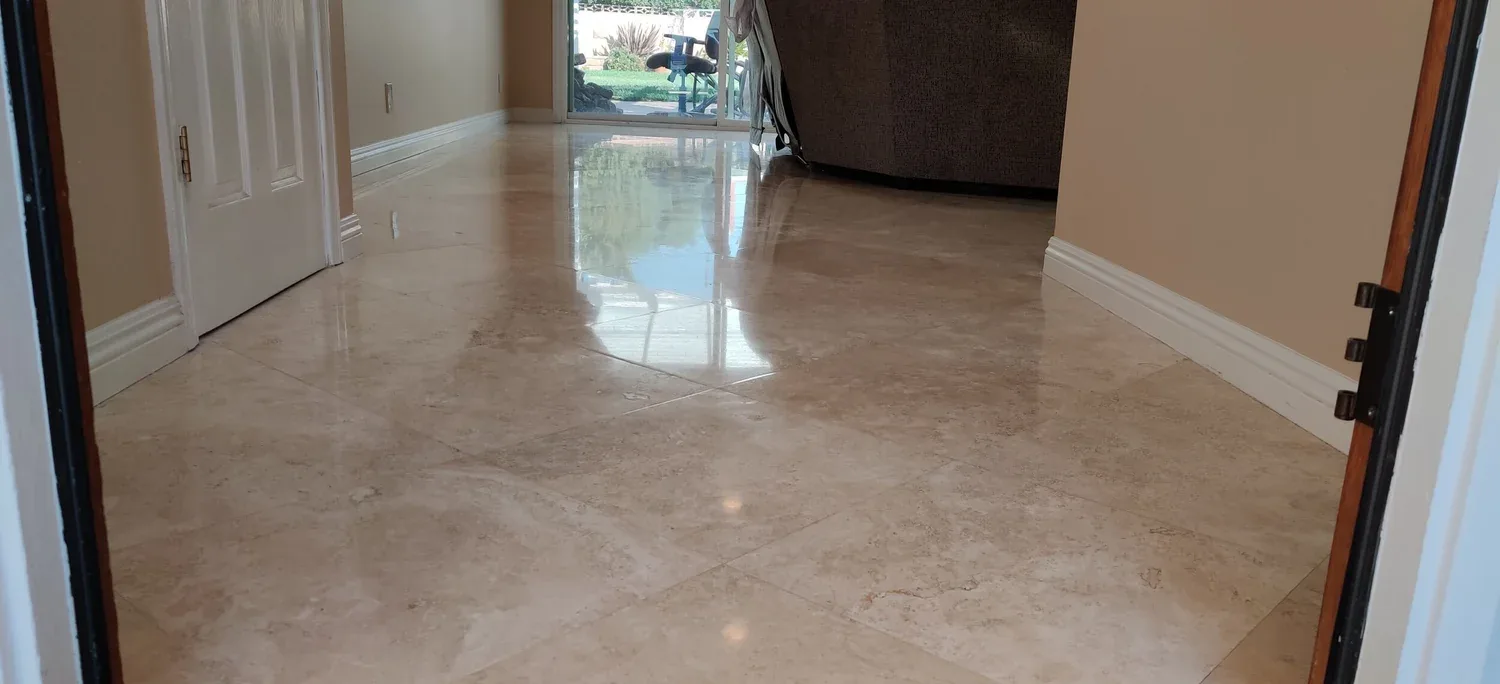
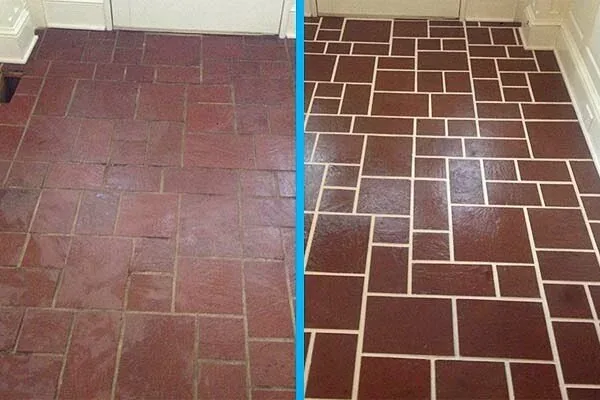
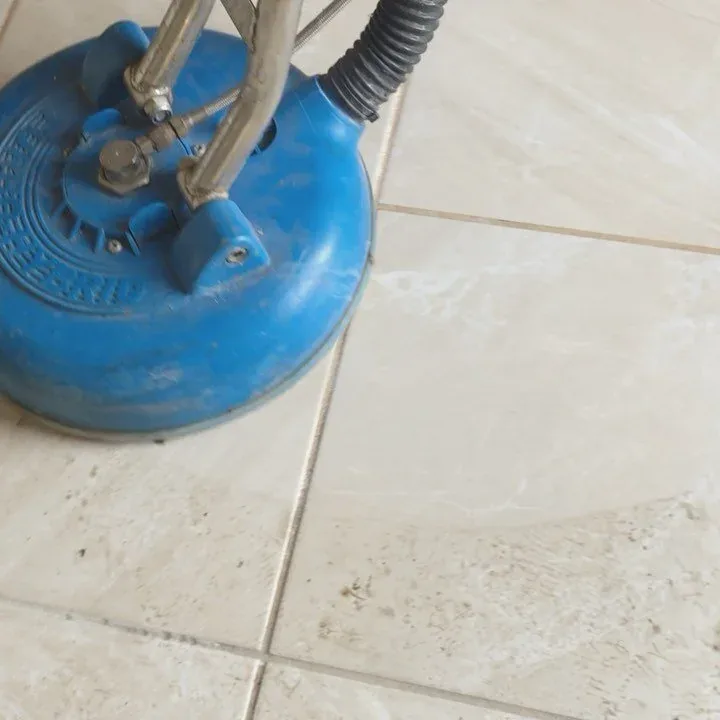
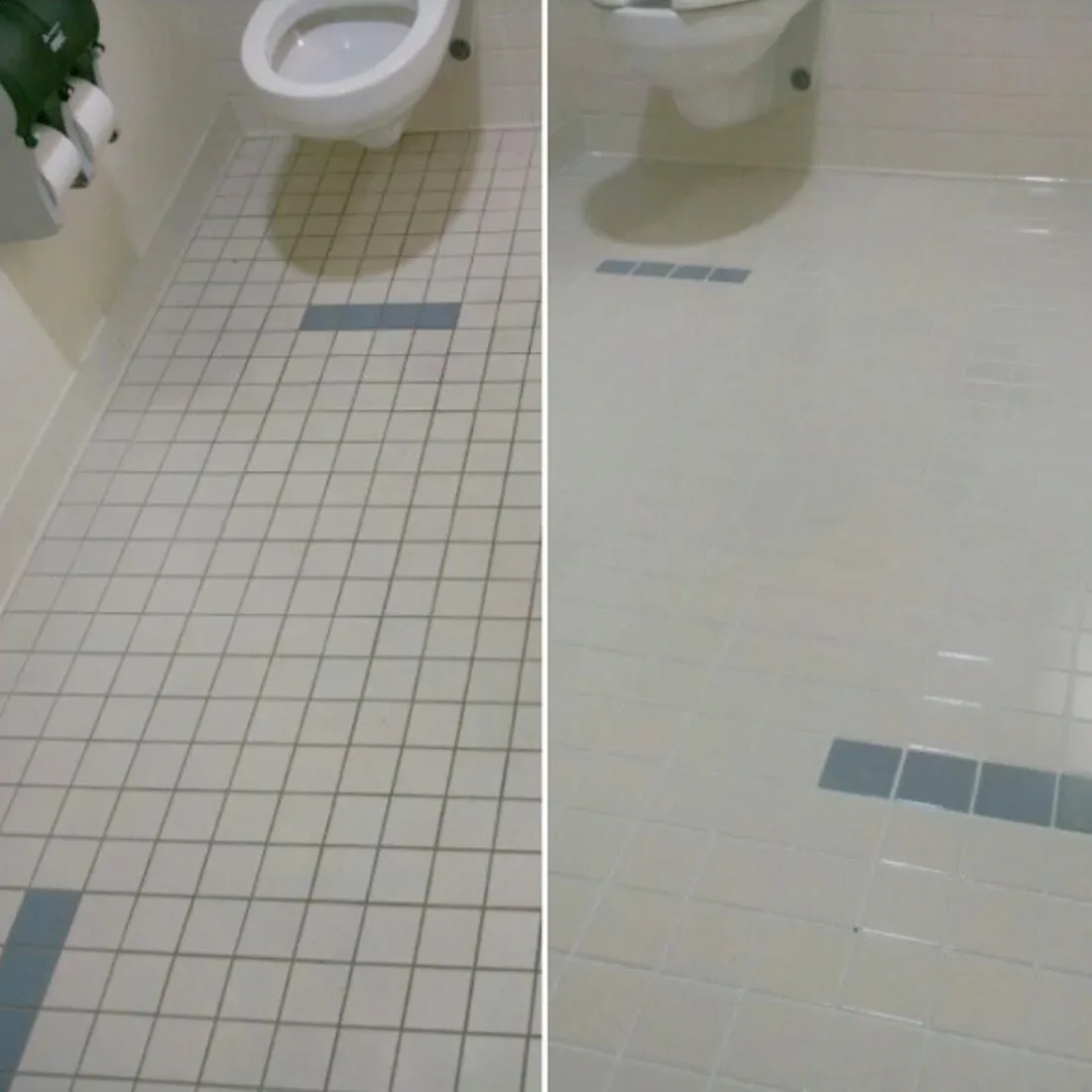
Real Grout Geek projects. View the portfolio
Our make-it-right guarantee
We walk the finished work with you before we leave. If any area isn't right, tell us and we'll come back and make it right at no charge. That's the standard we hold ourselves to on every floor.
Natural Stone Cleaning & Sealing: common questions
 Still curious? Ask a Geek by text, or call (805) 628-2011.
How do I know if my stone needs sealing?
Try the water drop test. Place a few drops of water on the stone in a high-use area and wait several minutes. If the stone darkens, it is absorbing and should be sealed. If the water beads or sits on top without darkening, the sealer is still working.
Will sealing make my stone stain proof?
No. Sealing makes stone more stain resistant, not stain proof. It slows absorption so you have time to wipe up a spill. And on marble, limestone, travertine and other calcareous stone, sealer does not prevent etching from acids.
Can old stains be removed from natural stone?
Many can. Oil, organic and water stains often respond to a poultice that draws them out of the stone. Very old or deep stains may take more than one application, and some can be lightened but not fully removed. We test and tell you what is realistic before we begin.
What is the right way to clean natural stone between visits?
Dust mop often, use mats at entrances and clean with a pH-neutral stone cleaner or a mild dish soap solution, then rinse. Avoid vinegar, lemon, bleach and abrasive powders, and keep rust removers and toilet bowl cleaners away from stone, since some contain acids that attack any stone.
How much does natural stone cleaning and sealing cost?
It depends on square footage, the stone type, how much soil and residue is present, the number of stains that need poultice treatment, grout condition and the sealer the stone requires. We provide a free on-site or photo estimate with a clear number.
How often should natural stone be resealed?
Anywhere from every year to every several years, depending on the stone, finish, traffic and product. Dense granite may rarely need it, while limestone and travertine need it more often. The water drop test is the most reliable guide for your floor.
Does granite need to be sealed?
Not always. The Natural Stone Institute notes that many granites are dense enough to absorb very little and may not need sealing, while others gain useful stain resistance from an impregnator. The water drop test tells you which kind you have. We do not apply sealer to stone that cannot absorb it, since excess left on the surface turns into haze.
Can you bring back the color of a faded slate floor?
Often, yes. A deep clean removes the residue and soil that make slate look gray and flat. If you want the richer look slate has when it is wet, a color-enhancing sealer can deepen its tone. We test it on a small area first, because the effect is a matter of taste.
Natural Stone Cleaning & Sealing near you
Often paired with
Get a free natural stone cleaning & sealing estimate
Tell us about the surface and send a few photos. We'll recommend a plan and schedule a free on-site visit to confirm it, with a written estimate and no pressure.