



Marble polishing and restoration
Marble is beautiful, soft and quick to react with acids, so a dull or etched floor is rarely a cleaning problem. It is a surface problem. We identify your marble and its original finish, diamond hone away the damage, then polish to the exact sheen you want, from soft honed matte to mirror.
When to call us
- Cloudy, dull traffic lanes through entries, halls and kitchens
- Etch marks and rings from wine, citrus, vinegar or the wrong cleaner
- Fine scratches and swirl marks from grit tracked in on shoes
- Uneven or lipped tile edges that catch the light and collect dirt
- Dark or yellowed stains that have soaked below the surface
- A floor that never looks polished no matter how often it is mopped
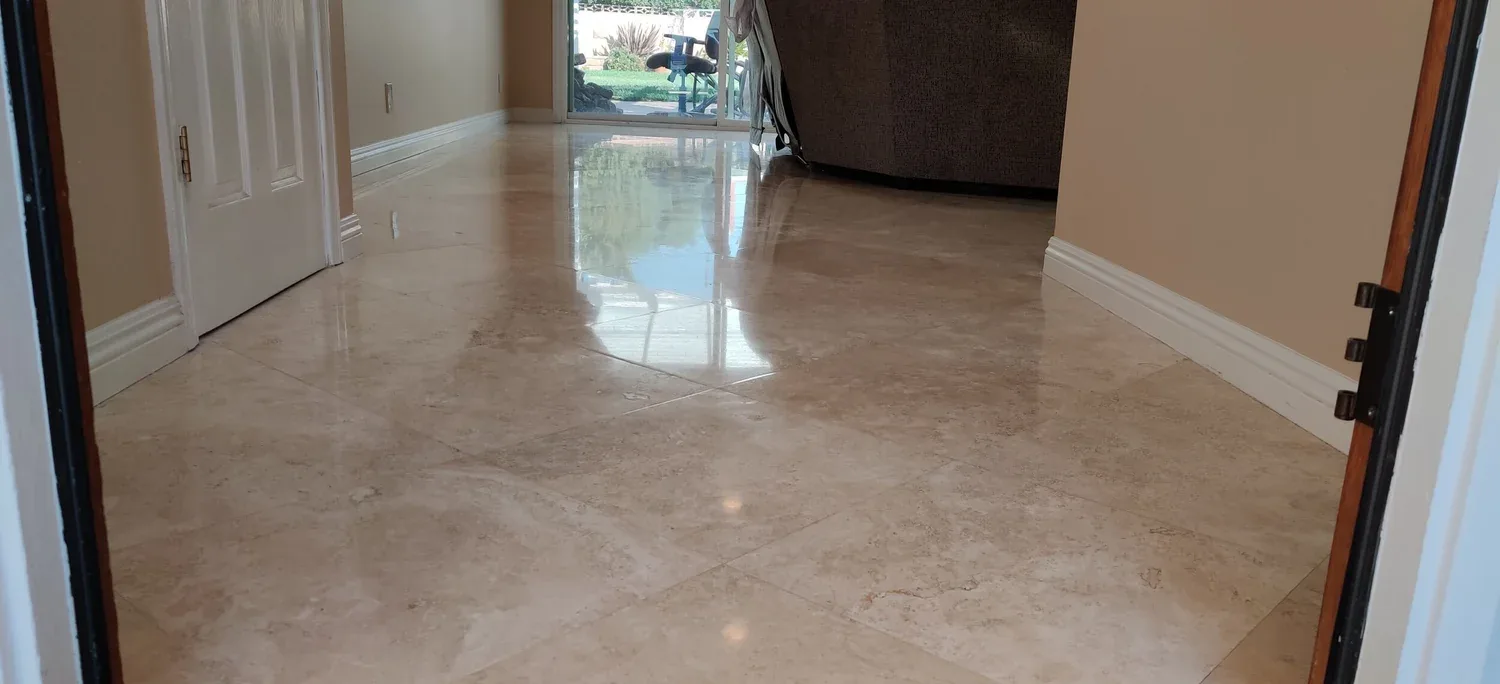
Why marble loses its finish
Marble is a metamorphic stone made largely of calcite, a form of calcium carbonate. Acids react with calcite on contact, and the result is an etch: a dull, slightly rough spot where the polished surface has been chemically eaten away. Lemon juice, wine, tomato, soda, vinegar-based cleaners and many bathroom products all etch marble. Because it is a reaction with the stone itself, an etch is not a stain, and no amount of scrubbing will lift it.
The second force is abrasion. Sand and grit tracked in from the beach, the driveway and the garden act like sandpaper under every footstep. Over months and years they wear thousands of fine scratches into the busiest paths, and those scratches scatter light instead of reflecting it. That is why so many marble entries and hallways still look polished along the walls and gray down the middle.
How we restore marble floors
Restoration starts with an assessment. We identify the marble, confirm its original finish, look for lippage, cracks and loose tiles, and test how deep the etching and scratching go. That tells us where in the abrasive sequence we need to begin, and it keeps us from removing more stone than the floor requires.
Before any machine runs, we protect the home: drop cloths on adjacent flooring, draping over cabinets and baseboards, and shoe covers indoors. Diamond honing is a wet process, so we contain the stone slurry as we work. We then hone with a progression of diamond abrasives, each finer than the last, removing a very thin layer of damaged stone until the surface is flat and uniform. From there we refine to your chosen finish and apply a penetrating sealer suited to the stone.
Etched marble repair: polish, hone or both
Light etching on a polished floor can sometimes be polished out without heavy honing. Deeper etches, scratches you can feel with a fingernail and uneven tile edges need diamond honing first, because polishing alone would shine the damage rather than remove it. When just a few spots are etched, we can often repair them locally and blend the sheen into the surrounding stone. On some floors a full room gives a more even result, and we will tell you which approach your floor needs and why.
Choosing a finish: honed, satin or polished
A polished finish reflects light and makes the veining look deep and vivid, but it shows etching and scratches more readily. A honed finish is smooth and matte, hides wear well and is less slippery when wet, which is why many designers specify it for kitchens, baths and busy entries. Satin sits between the two. Because the finish is created mechanically rather than with a coating, we can restore the one you have or change it, for example taking a polished kitchen floor down to a more forgiving hone.
Keeping marble looking restored
Sealing helps, but it is not a shield. A penetrating sealer slows the absorption of oils and colored liquids, which buys you time to wipe up a spill. It does not stop acid from etching the surface. Day to day, the habits that protect marble are simple: dust mop often so grit does not grind in, keep mats at exterior doors, wipe spills promptly and clean with a pH-neutral stone cleaner. We leave a short written care guide with every job.
What's included
- On-site assessment and a small test area when needed
- Full room protection with drop cloths, draping and shoe covers
- Diamond honing progression matched to the damage
- Finish to honed, satin or high polish
- Penetrating sealer suited to the marble
- Written care guide and our make-it-right guarantee
Careful by design
Stone is unforgiving. The wrong cleaner etches marble, the wrong pad scratches it, the wrong sealer turns terracotta shiny and fake. Every project starts with understanding the surface.
Identify the marble, finish and depth of damage
Protect floors, baseboards and cabinetry
Diamond hone out etching, scratches and lippage
Polish or hone to the finish you choose
Seal and walk you through simple care
Real Grout Geek projects
Photos from our own jobs, not stock.
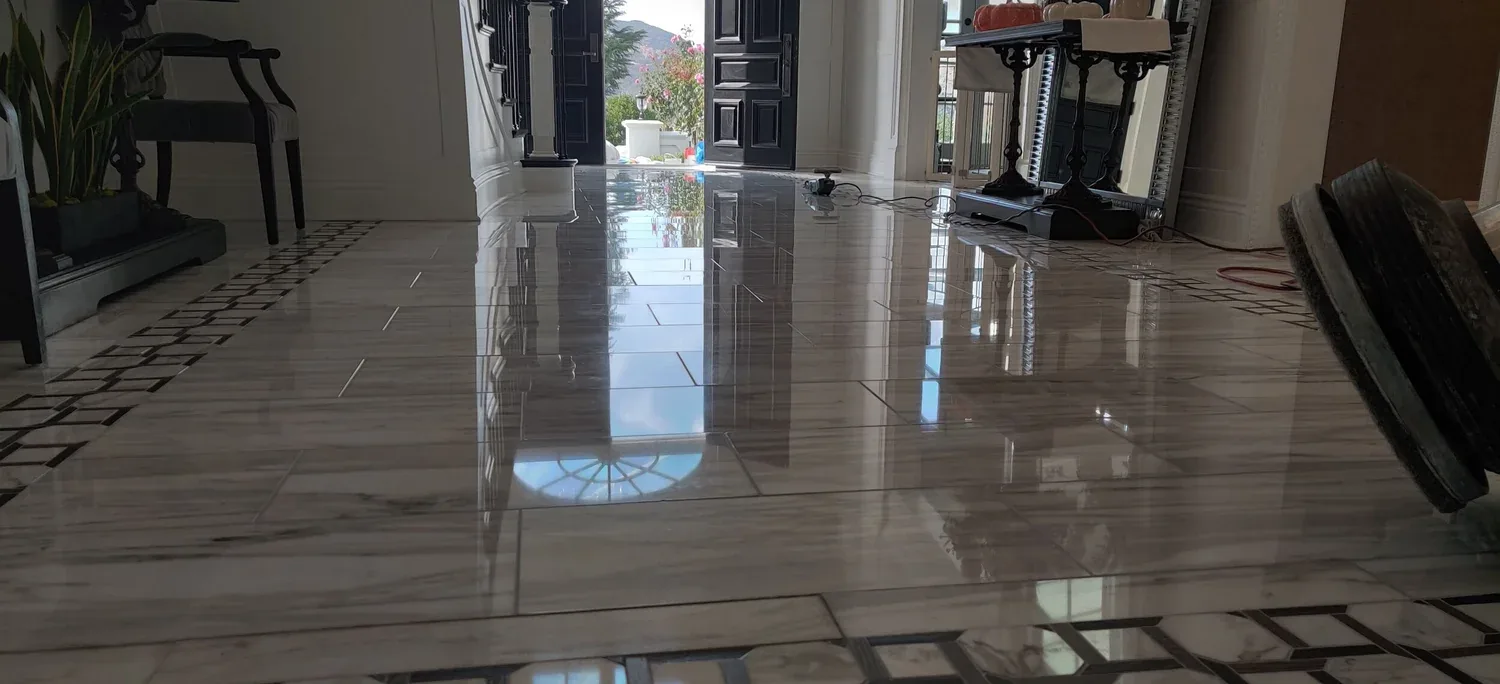
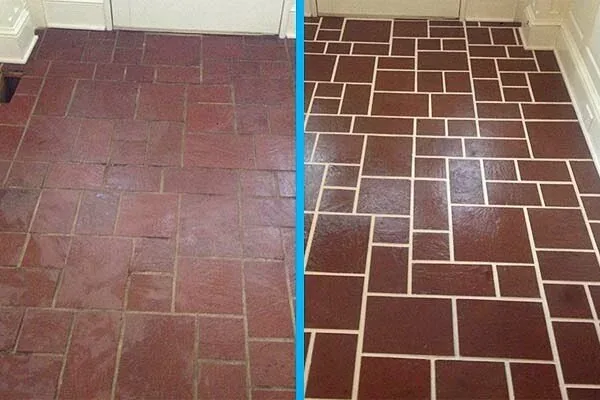
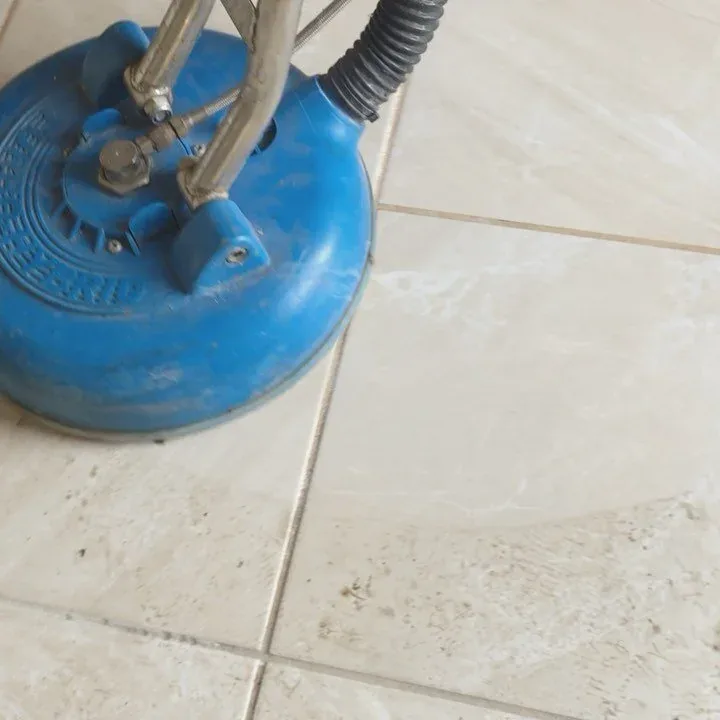
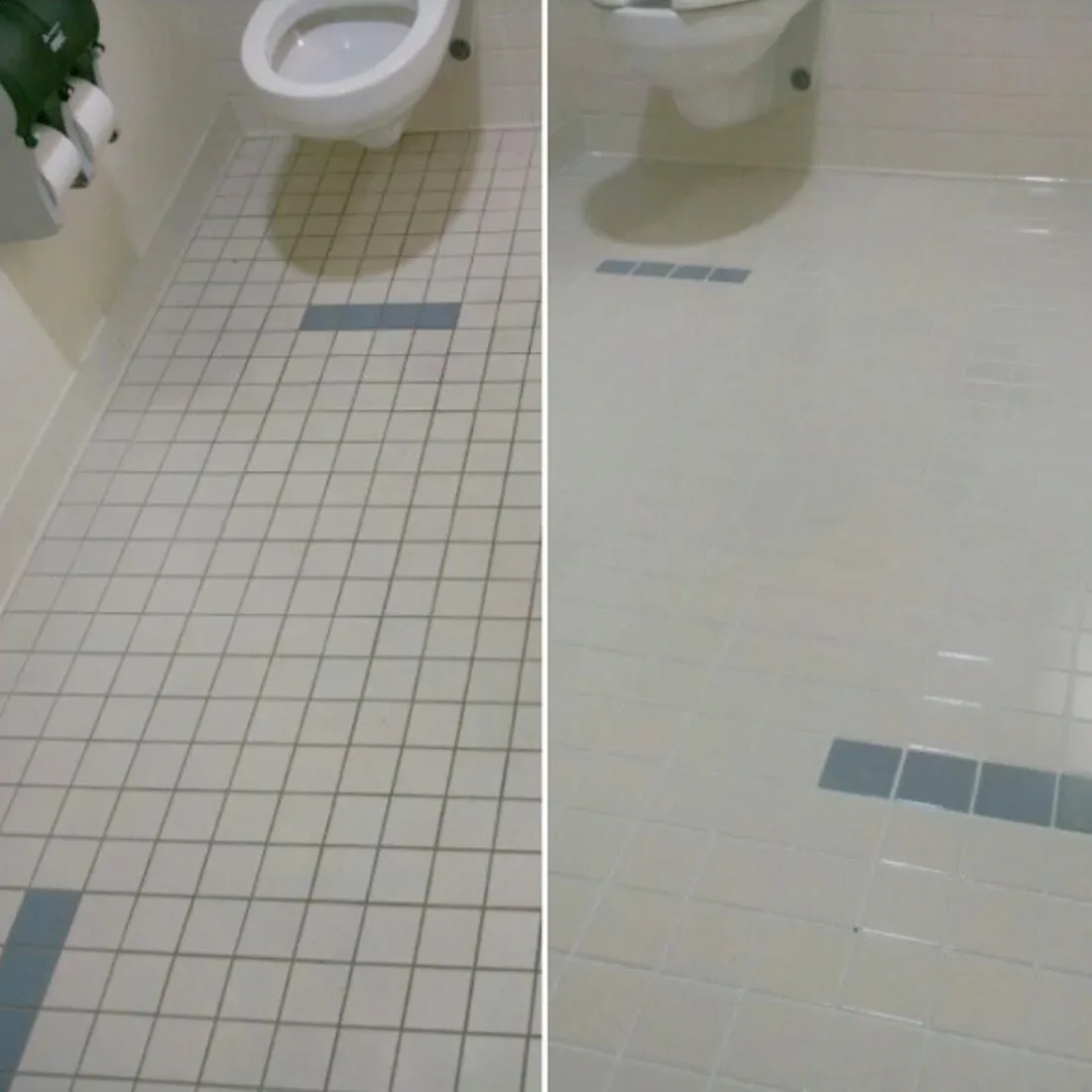
Real Grout Geek projects. View the portfolio
Our make-it-right guarantee
We walk the finished work with you before we leave. If any area isn't right, tell us and we'll come back and make it right at no charge. That's the standard we hold ourselves to on every floor.
Marble Polishing & Restoration: common questions
 Still curious? Ask a Geek by text, or call (805) 628-2011.
Can etch marks be removed from marble?
Yes. An etch is surface damage, so it is removed by refinishing the stone rather than cleaning it. Light etching on a polished floor can often be polished out. Deeper etching, or etching on a honed floor, is removed with diamond honing and then refined back to match the surrounding finish. We test a small area first so you know what to expect.
Will sealing my marble stop etching?
No. The Natural Stone Institute is clear that sealers make stone more stain resistant, not etch resistant. Sealer slows the absorption of liquids into the pores, while etching is a chemical reaction that happens at the surface the moment acid touches the stone. The real protection is wiping up acidic spills quickly and using pH-neutral cleaners.
What is the difference between marble honing and marble polishing?
Honing uses diamond abrasives to flatten the surface and remove etching, scratches and lippage, leaving a smooth matte finish. Polishing continues with finer abrasives and polishing compounds to build reflectivity. Most restoration projects use both: honing to remove the damage, then polishing to the sheen you choose.
How much does marble polishing cost?
Every floor is different, so we do not quote a flat rate. Cost depends on square footage, the type of marble, how deep the etching and scratches go, whether lippage needs to be ground flat, the finish you want, and how much furniture moving and protection the job requires. A free on-site or photo estimate gives you a clear, written number for your floor.
How long does marble floor restoration take?
Many single rooms are completed in a day. Larger floors, whole-home projects and floors that need heavy honing take longer. We give you a timeline with your estimate and plan the work around how you use the house.
Can I walk on the floor afterward?
Usually yes, once the floor is dry, in clean socks or soft shoes. Penetrating sealers have their own cure times before mopping, rugs and heavy furniture go back, and we will tell you exactly what applies to the product we used on your floor.
Should I restore or replace my marble floor?
If the tiles are sound and firmly set, restoration nearly always makes more sense. It avoids demolition and the challenge of matching new stone to old, and it keeps the marble that was chosen for the house. Cracked or hollow-sounding tiles can often be addressed individually as part of the project.
Why does my marble look worse after using a store-bought cleaner?
Many all-purpose, bathroom and glass cleaners are acidic or leave a film. On marble they can etch the surface or build up a dull residue that holds dirt. If the damage is etching, the floor needs refinishing. If it is residue, a stone-safe deep clean often brings the finish back.
Marble Polishing & Restoration near you
Often paired with
Get a free marble polishing & restoration estimate
Tell us about the surface and send a few photos. We'll recommend a plan and schedule a free on-site visit to confirm it, with a written estimate and no pressure.