


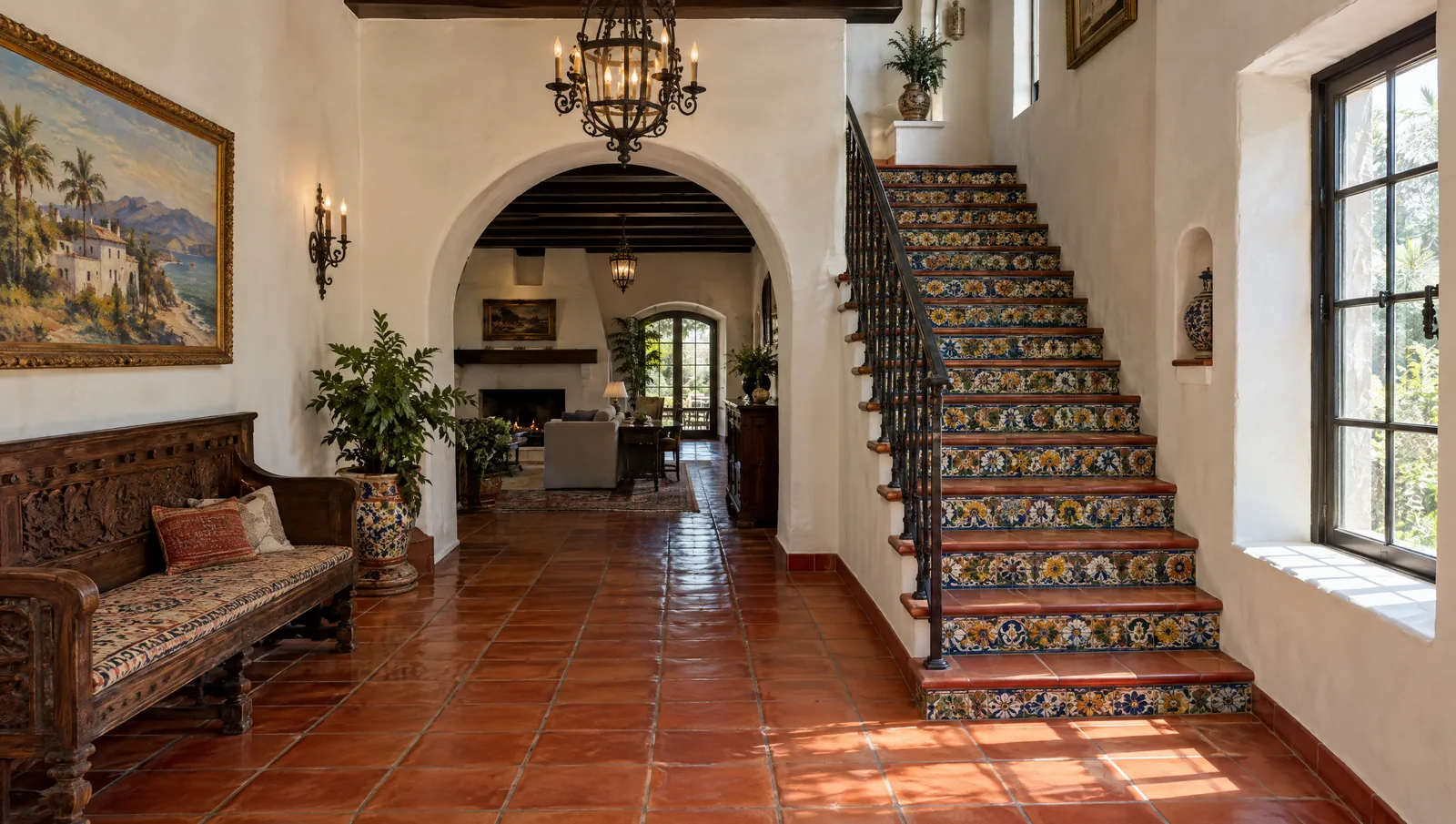
Saltillo tile restoration and terracotta floor refinishing
Handmade clay tile is the heart of a Spanish-style home. Over time, layers of wax and sealer wear unevenly, yellow and trap dirt, and the floor turns blotchy: dark in the traffic paths, dry and chalky near the walls. Stripping and resealing brings back the warm, even color the tile was made to have.
When to call us
- Blotchy color, dark in traffic paths and pale near the walls
- Old wax or sealer that has yellowed, peeled or worn through
- Dirt trapped under or within old coatings
- Tiles that look dry, chalky or faded
- White haze or powdery deposits on tile or grout
- A glossy, plastic look you would like to tone down
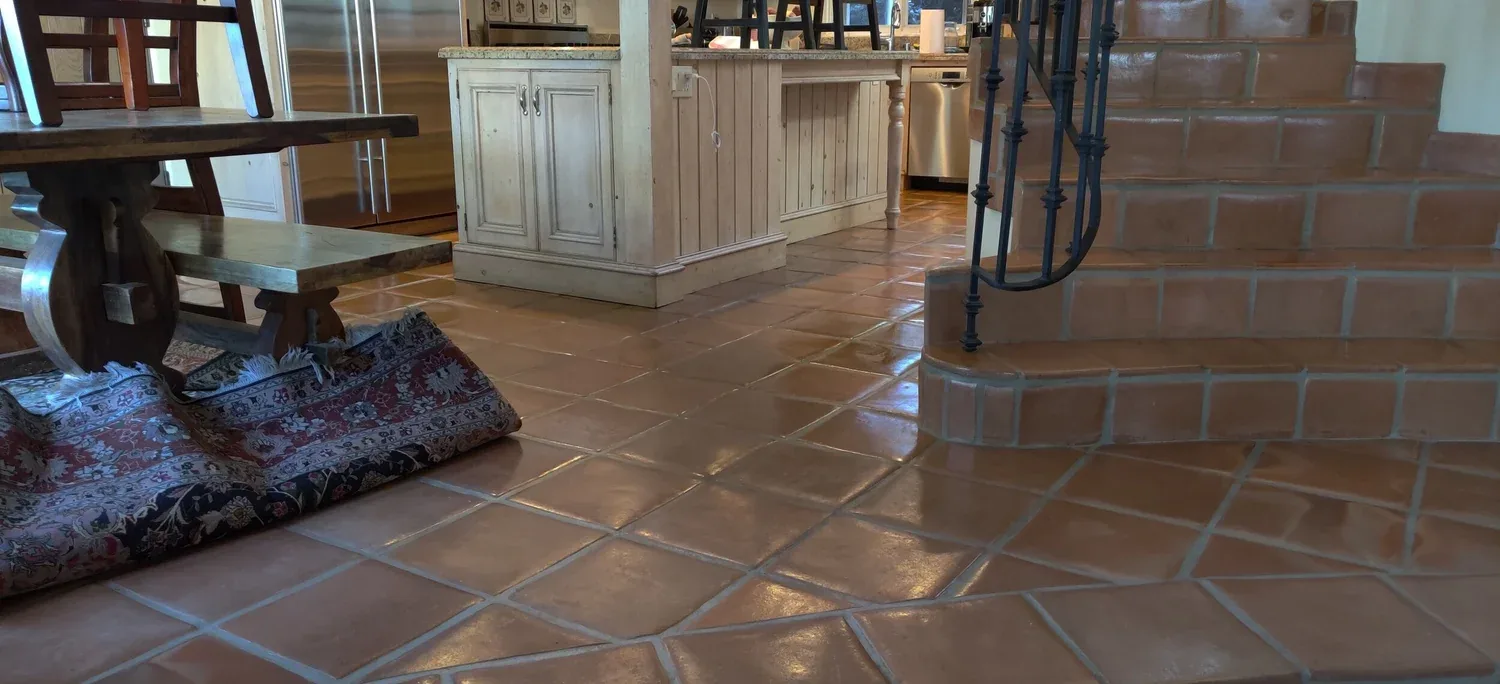
Why saltillo and terracotta look tired
Saltillo and terracotta are fired clay, and traditional saltillo is fired at relatively low temperatures, which leaves it soft and very porous. Unsealed, it absorbs nearly anything spilled on it. That is why these floors are protected with sealers and, in many older homes, layers of paste wax or acrylic finish.
Those coatings wear the way the finish on a wood floor wears: through in the walkways, built up along the edges. Wax yellows and holds dirt. Mopping over a failing finish spreads the grime around, and adding more coats on top tends to deepen the blotchiness rather than solve it.
How we restore clay tile floors
We begin by testing the existing finish so we know what we are removing, since wax, acrylic and solvent-based sealers respond to different strippers. The room is protected with drop cloths and draping, and we wear shoe covers indoors. Then we strip the old coatings, working in manageable sections and keeping the stripper from drying on the tile, and agitate and extract the residue from the clay and grout. Saltillo grout lines are wide, so cleaning them thoroughly changes how the whole floor reads, and cracked or missing grout can be repaired before sealing.
Next comes the step that cannot be rushed: drying. Clay holds water, and sealing over moisture can cloud the finish or trap salts that later surface as white haze. We make sure the floor is dry before resealing, and we plan the work around that drying time. Finally we apply sealer in thin, even coats to the sheen you choose.
Choosing your finish
A low-sheen or matte finish keeps the handmade, earthy character of the clay and is the look many people associate with historic California homes. A satin finish deepens the color and makes the floor easier to wipe clean. Higher gloss is possible but can look plastic on handmade tile. Taking a glossy floor down to matte is a common request, and stripping and resealing with a low-sheen product does exactly that. We show you samples before sealing, so the result suits the house and the way you live in it.
Saltillo resealing between restorations
Once a clay floor has been properly stripped and sealed, it does not need to be stripped again every time it looks worn. Periodic deep cleaning and a maintenance coat of compatible sealer in the traffic areas can keep it even for years. Using the same type of sealer each time matters, because layering incompatible products is a common cause of peeling and clouding.
Efflorescence, lime pops and other clay quirks
Handmade saltillo can show white powdery deposits called efflorescence, as moisture carries salts to the surface, and small lime pops where bits of limestone in the clay expand. Efflorescence on a sealed floor has to be addressed by removing the sealer in that area, cleaning, drying and resealing. We assess these conditions during the estimate and explain what can realistically be improved.
Restoring clay floors in older and historic homes
Saltillo and terracotta run through Spanish Colonial Revival, Mission-style and ranch homes from Santa Barbara and Montecito to Ojai and Ventura. In older homes, the goal is usually to bring the floor back to a warm, even color while keeping the handmade variation and patina that make it feel original. We do not try to make old clay look factory new. We remove what is failing, clean what is underneath and seal so the natural character of the tile shows through.
What's included
- Finish testing to choose the right stripper
- Full stripping of wax and worn sealers
- Deep cleaning and extraction of clay and grout
- Proper drying time before any sealer goes down
- Resealing to matte, low-sheen or satin
- Maintenance guidance and make-it-right guarantee
Careful by design
Stone is unforgiving. The wrong cleaner etches marble, the wrong pad scratches it, the wrong sealer turns terracotta shiny and fake. Every project starts with understanding the surface.
Test the existing wax or sealer
Strip old coatings in controlled sections
Deep clean and extract clay and grout
Dry the floor fully before sealing
Reseal in thin coats to your chosen sheen
Real Grout Geek projects
Photos from our own jobs, not stock.
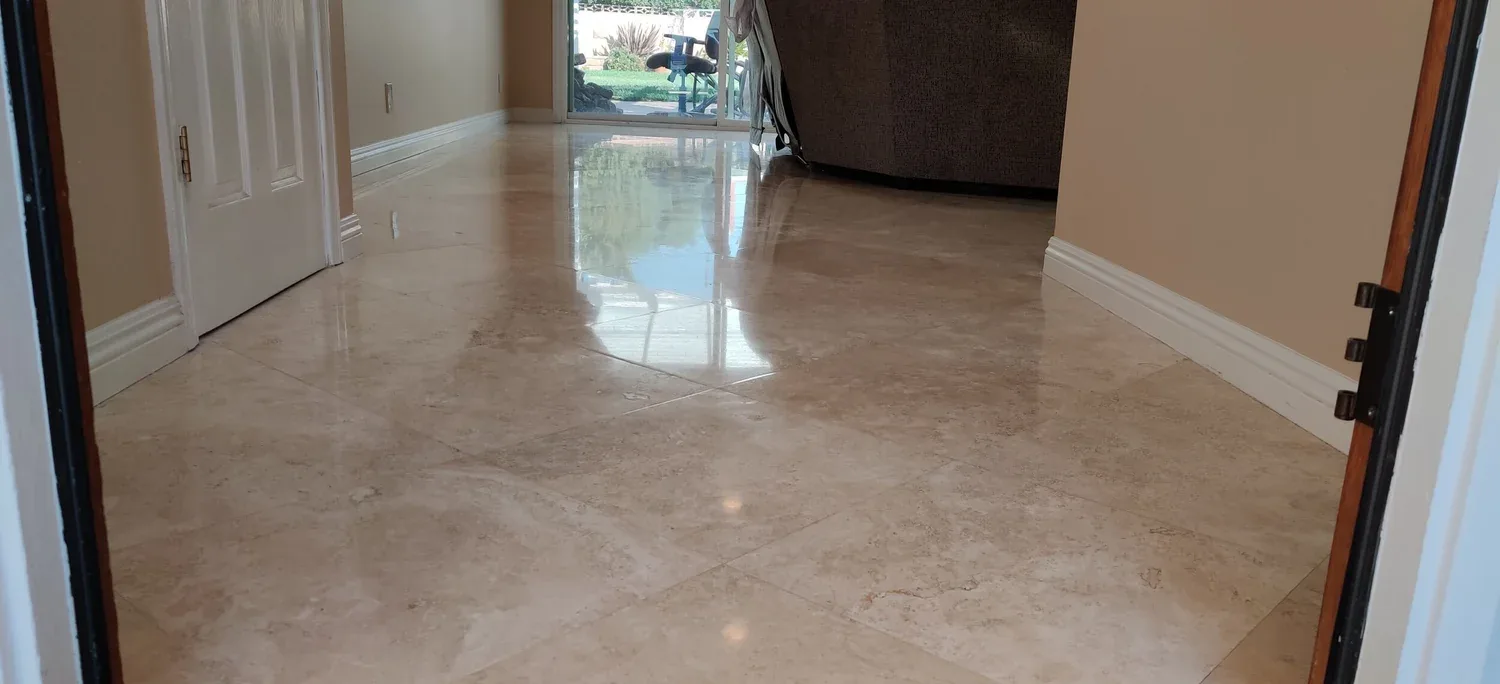
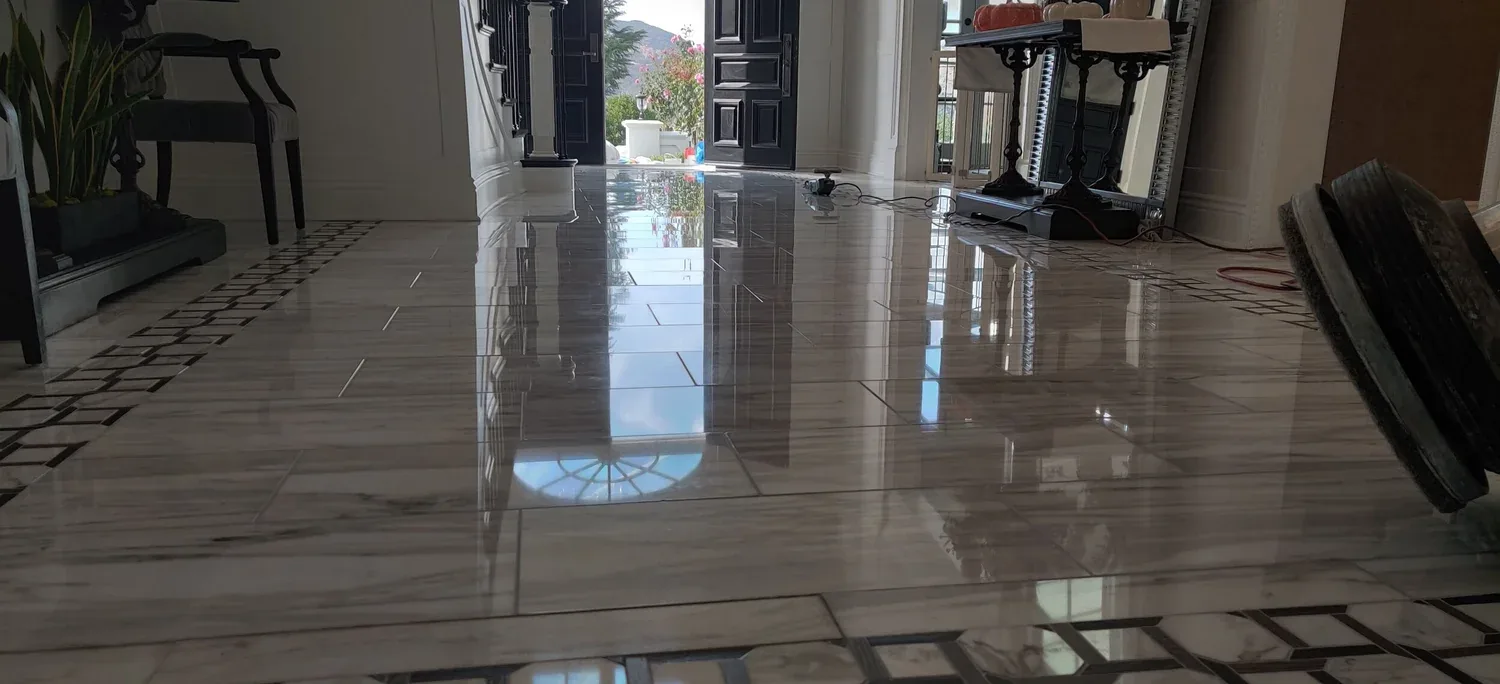
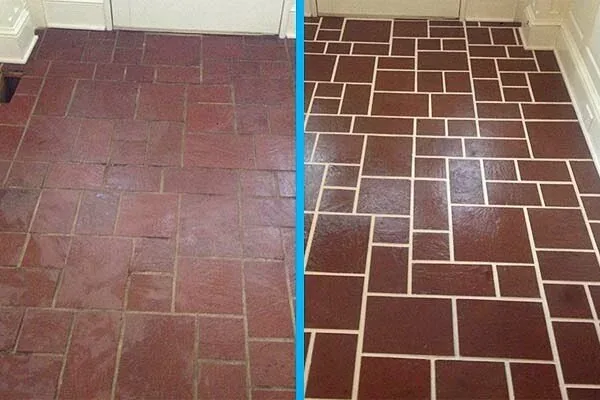
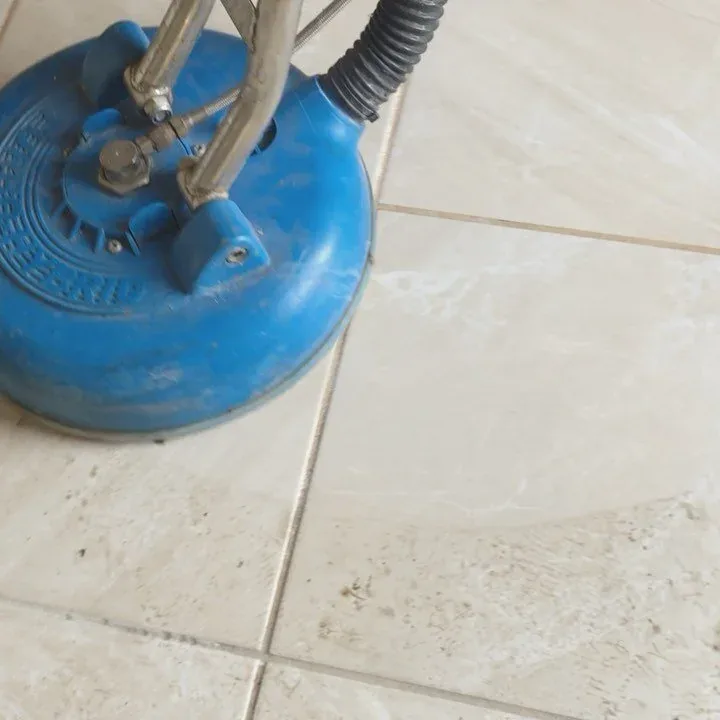
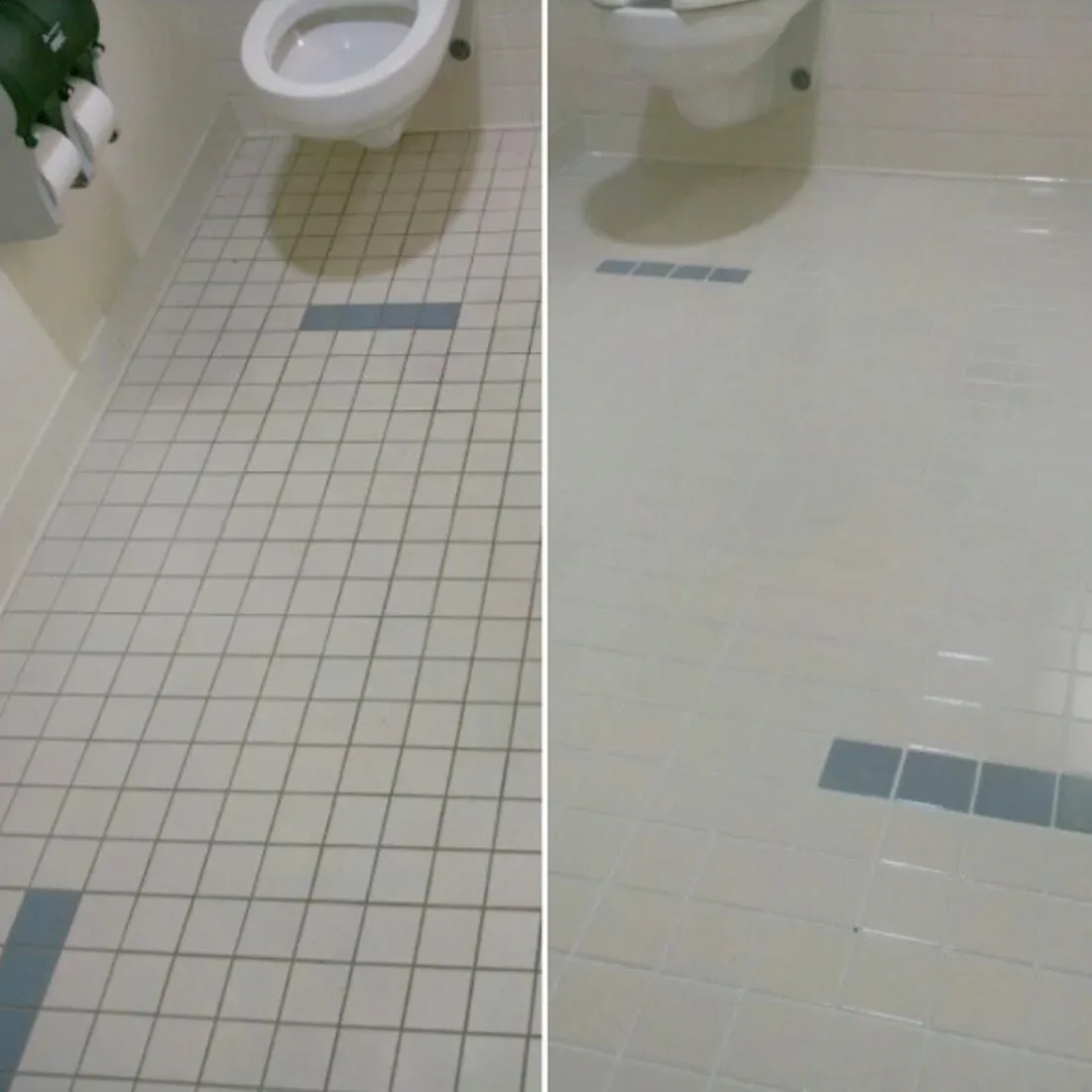
Real Grout Geek projects. View the portfolio
Our make-it-right guarantee
We walk the finished work with you before we leave. If any area isn't right, tell us and we'll come back and make it right at no charge. That's the standard we hold ourselves to on every floor.
Saltillo & Terracotta Restoration: common questions
 Still curious? Ask a Geek by text, or call (805) 628-2011.
Can saltillo tile be restored without replacing it?
Yes. Most saltillo and terracotta floors can be stripped, deep cleaned and resealed to an even, fresh color without replacing any tile. Cracked or loose individual tiles can be addressed separately as part of the project.
How long does saltillo restoration take?
It depends on the size of the floor, the coatings being removed and drying conditions. The clay must be dry before sealing, and we do not skip that step. We'll give you a clear timeline with your estimate.
What causes the white haze on my saltillo?
Usually one of two things: efflorescence, where salts migrate up through the clay, or sealer applied over moisture, which can cloud. Both are corrected by removing the affected sealer, cleaning, drying the tile properly and resealing.
What sheen should I choose for terracotta?
Matte or low sheen looks the most natural and authentic on handmade clay. Satin deepens the color and is a little easier to maintain. We show you samples on your own tile before we seal.
How do I maintain sealed saltillo?
Sweep or dust mop often and clean with a pH-neutral cleaner. Avoid vinegar, strong degreasers and ammonia, which break down sealers. Keep mats at exterior doors, and schedule a maintenance coat when the traffic areas start to look dry.
How much does saltillo restoration cost?
We do not quote a set rate. Cost depends on square footage, how many layers of wax or sealer need stripping, grout condition, any efflorescence, the sheen you want and furniture or room access. A free on-site or photo estimate gives you an exact figure.
Do I need to clear the room for saltillo restoration?
Yes. The floor needs to be clear for stripping and sealing, and it stays clear until the sealer has cured enough for furniture to return. We can often work in phases, one area at a time, so the house stays livable. We plan the sequence with you during the estimate.
Can I strip and reseal saltillo myself?
It can be done, but it is easy to go wrong. The stripper must suit the existing coating and be kept wet while it works, the residue has to be fully extracted, and the clay must be completely dry before sealing. Mistakes usually show up as cloudy, blotchy or peeling sealer that then has to be stripped again.
Saltillo & Terracotta Restoration near you
Often paired with
Get a free saltillo & terracotta restoration estimate
Tell us about the surface and send a few photos. We'll recommend a plan and schedule a free on-site visit to confirm it, with a written estimate and no pressure.