


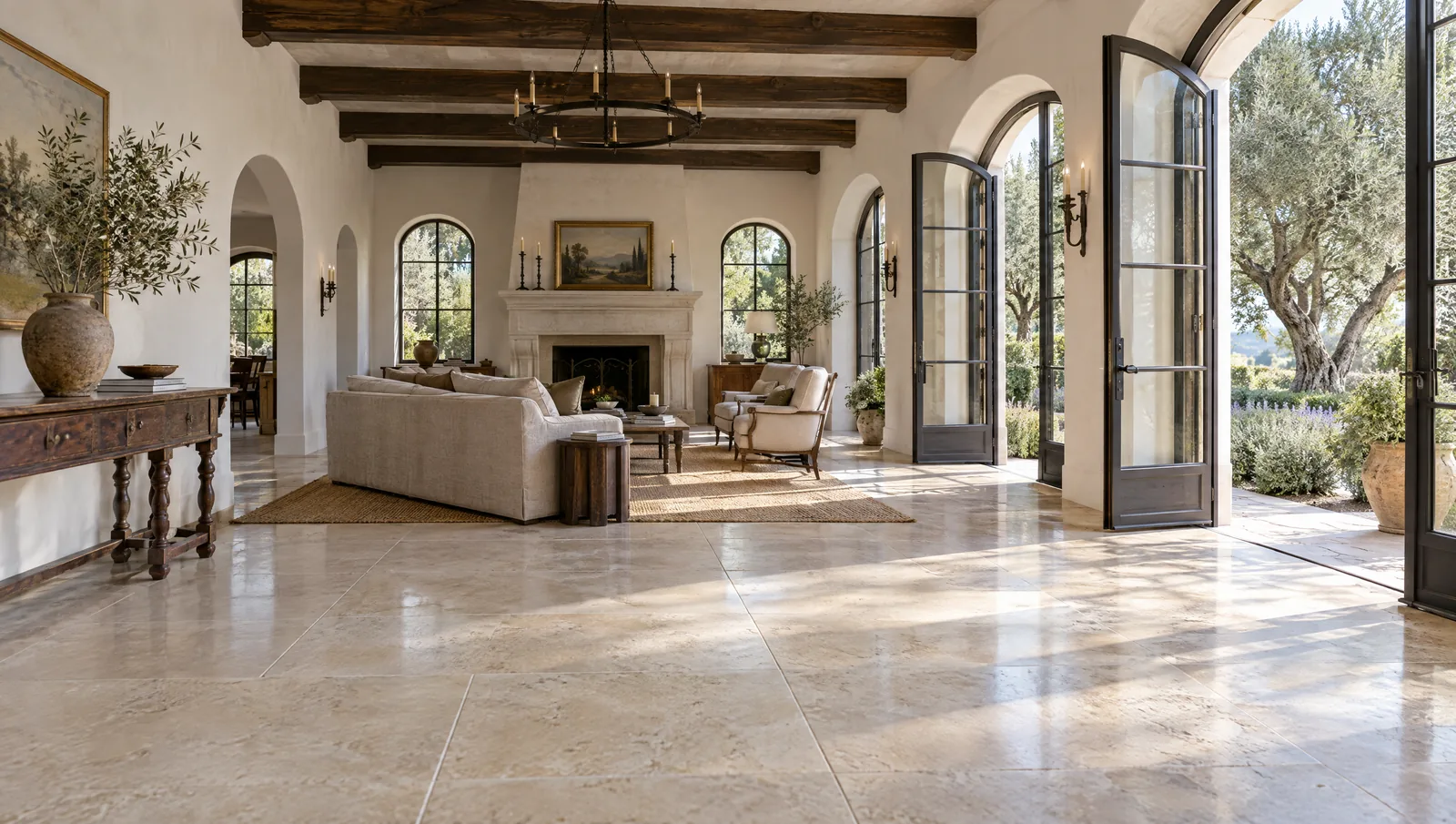
Marble polishing in Montecito
Montecito homes ask a lot of their stone. Marble, limestone and travertine floors carry guests in from the garden and the beach, and they see more wine, citrus and entertaining than most. We restore that stone carefully, quietly and to the finish the house was designed for.
Does your floor need this?
- Dull rings and spots where glasses, citrus or wine have touched the stone
- Flat, worn traffic lanes from garden and terrace doors
- Fine scratches from sand and grit carried in from outside
- A polished floor that no longer reflects evenly from room to room
- Dark stains near the kitchen, bar or powder room that cleaning will not lift
- Limestone or travertine that looks cloudy or tired even when clean
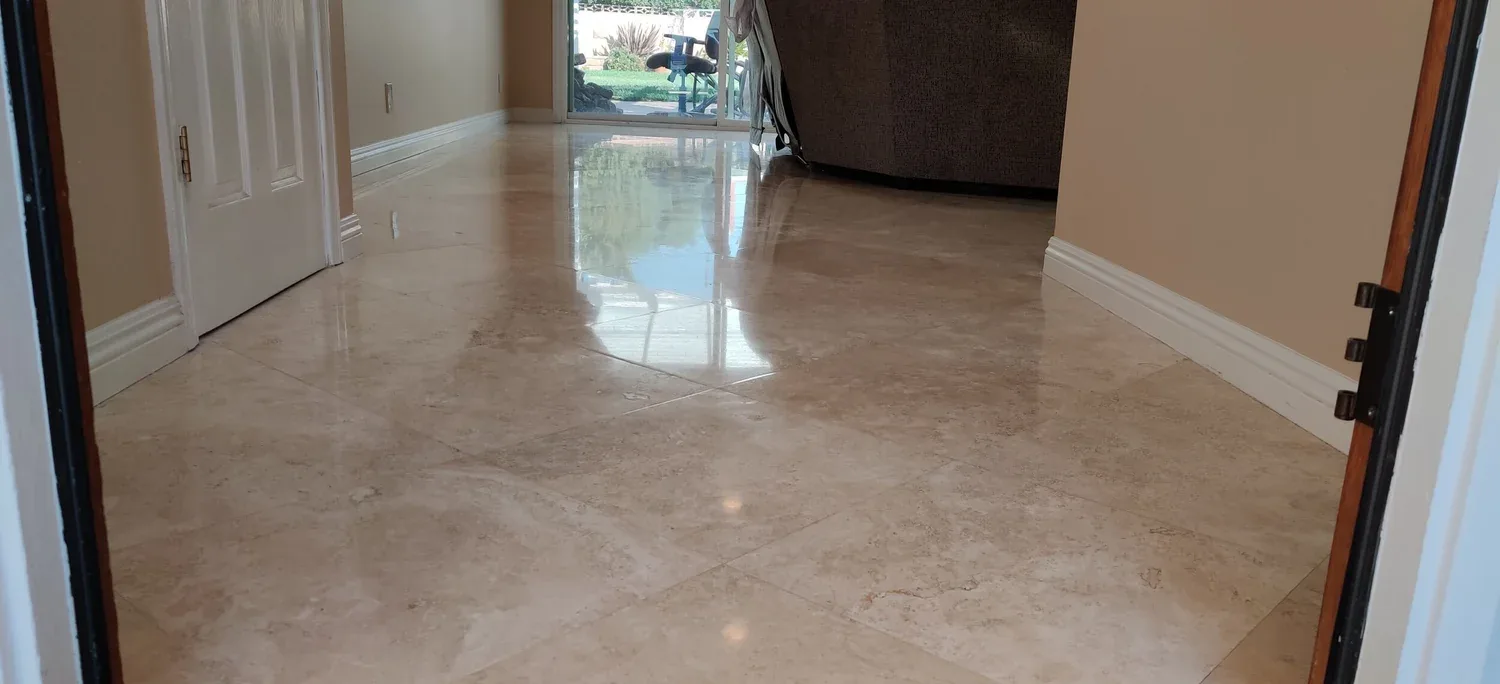
Stone in a Montecito house
Montecito's architecture has long leaned toward the Mediterranean. George Washington Smith, often credited as the father of the Spanish Colonial Revival style in the United States, designed Casa del Herrero here; it was completed in 1925 and is now a National Historic Landmark. That tradition of Spanish, Italian and Mediterranean influence continues in estates across the Hedgerow, around the Upper Village and up into the foothills, alongside newer homes with large-format marble and limestone.
Those floors are often irreplaceable in practical terms. A particular marble may come from a quarry bed that is no longer available, and limestone or travertine laid decades ago has aged into a color new tile will not match. Restoring the existing stone keeps the floor original.
Why estate marble etches and dulls
Marble, limestone and travertine are calcareous, meaning they are made largely of calcium carbonate, which reacts with acids. Lemon from the garden, a spilled cocktail, wine at a dinner party or the wrong cleaner leaves a dull, slightly rough mark called an etch. Etching is not a stain. It is a change to the surface of the stone itself, and it shows most on a polished finish.
Coastal life adds a second factor. Sand carried in from Butterfly Beach or the garden paths acts as an abrasive under shoes and furniture, gradually wearing the polish off entries, terrace doors and hallways. Over years, the combination leaves a floor reflective at the edges and flat down the middle.
Honed or polished: a decision worth making deliberately
A polished finish reflects light and deepens color and veining. It is the traditional choice for formal entries, galleries and living rooms. The tradeoff is that every etch and scratch catches the light, and a polished floor is more slippery when wet.
A honed finish is smooth and matte. It does not resist acid any better, but it hides etching far more gracefully, offers better footing, and suits kitchens, baths, loggias and rooms that open to the garden. Many estates use both: polished stone in the formal rooms, honed stone where people cook, entertain and come in from outside. Because we restore with diamond abrasives, we can bring a floor back to its original sheen or change it, and we will refine a small test area first so you can see the result in your own light before we proceed.
How we restore marble and limestone
We identify the stone before anything else, since marble, limestone and travertine respond differently and some limestones will not hold a high polish. Rooms are protected and furniture is moved with care. Light etching on a polished floor can often be polished out. Deeper etches and scratches are removed with a progression of diamond abrasives, each finer than the last, until the surface is uniform, and the floor is then refined to the chosen sheen. Travertine voids are filled with a color-matched filler before honing.
Stains are treated separately from etching. Oil and organic stains that sit below the surface are drawn out with a poultice before refinishing. We finish with a penetrating sealer, which helps the stone resist staining. It will not prevent etching, and we say so plainly so expectations are right from the start.
Discretion and working with your household
Grout Geek is a military-family owned company founded in Ventura in 2018, and our family background spans tile installation, stone fabrication, tile sales and stone warehousing. We understand that many Montecito homes are run by estate or house managers, and that owners are often away when work is scheduled.
We are glad to coordinate directly with your manager, work within the household's routine, and keep the job contained to the rooms involved. A photo-based estimate is often the easiest place to start, followed by an on-site visit when it is convenient. We do not photograph or share your home without your permission.
Etch removal, honing and polishing for marble, limestone and travertine, scheduled around your household and backed by our make-it-right guarantee.
Serving Montecito neighborhoods
- Hedgerow
- Upper Village
- Coast Village Road
- Birnam Wood
- Riven Rock
- Montecito foothills
Careful by design
Stone is unforgiving. The wrong cleaner etches marble, the wrong pad scratches it, the wrong sealer turns terracotta shiny and fake. Every project starts with understanding the surface.
Identify the marble, finish and depth of damage
Protect floors, baseboards and cabinetry
Diamond hone out etching, scratches and lippage
Polish or hone to the finish you choose
Seal and walk you through simple care
Real Grout Geek projects
Photos from our own jobs, not stock.
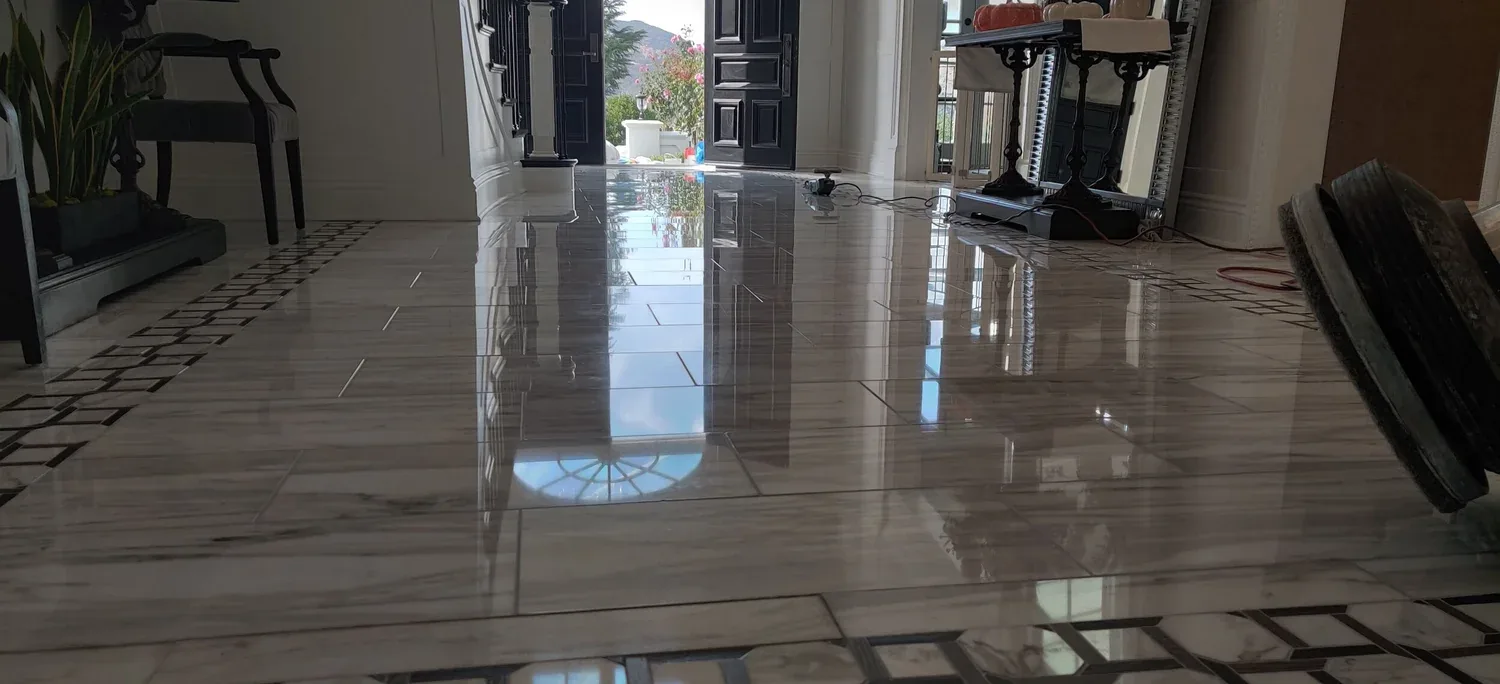
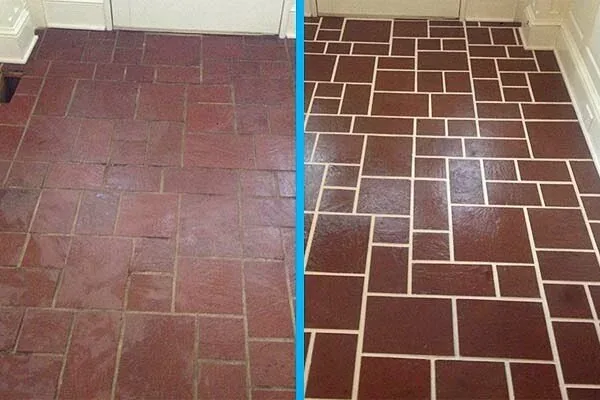
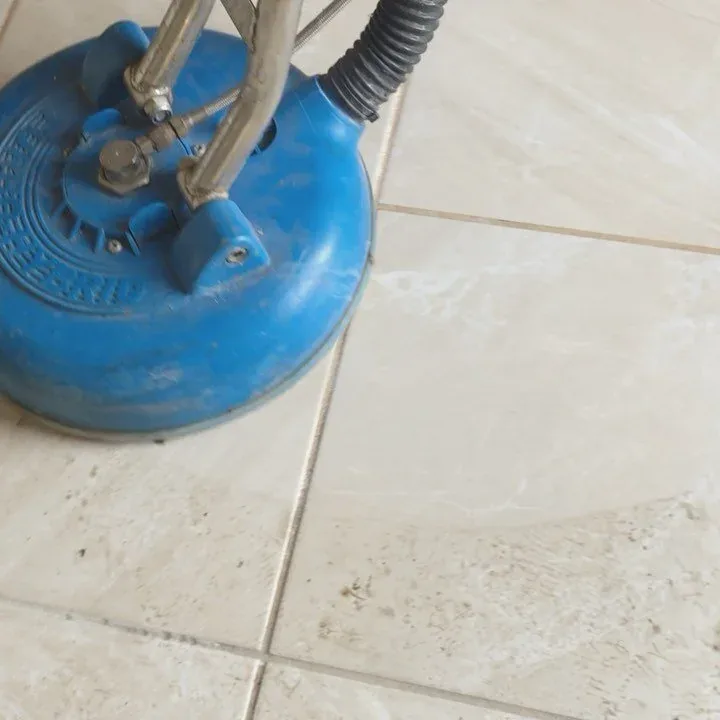
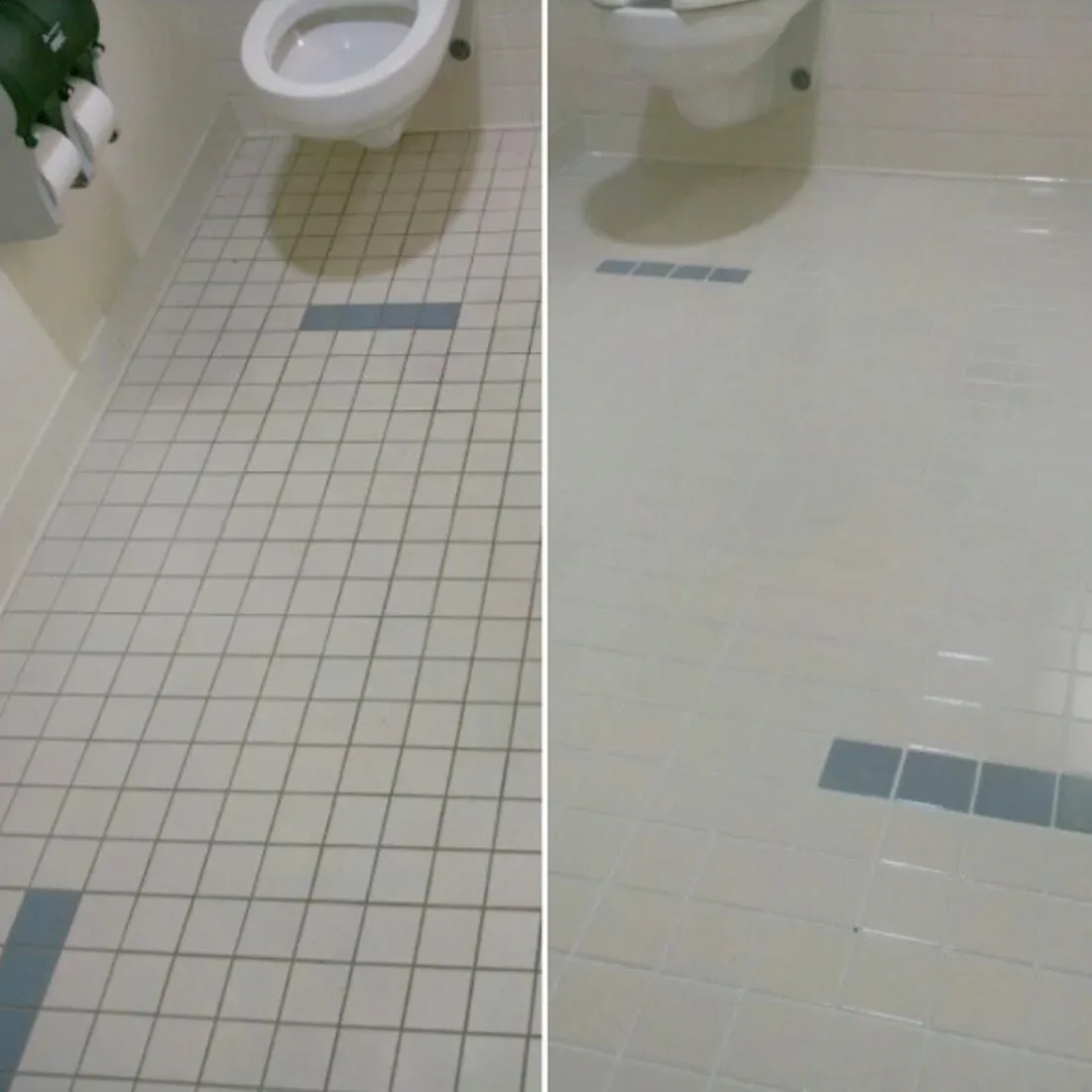
Real Grout Geek projects. View the portfolio
Our make-it-right guarantee
We walk the finished work with you before we leave. If any area isn't right, tell us and we'll come back and make it right at no charge. That's the standard we hold ourselves to on every floor.
Marble Polishing & Restoration in Montecito: questions
 Still curious? Ask a Geek by text, or call (805) 628-2011.
Do you also polish travertine and limestone in Montecito?
Yes. Travertine and limestone are restored with the same diamond honing process as marble. Travertine often needs its open voids filled with a color-matched filler first, and some limestones are better suited to a honed or satin finish than a high polish. We assess the stone before recommending a finish.
Can etch marks be removed without refinishing the whole floor?
Often, yes. Light etching on polished marble can be polished out locally. Deeper etching requires honing, and to keep the sheen consistent we usually refinish the affected tiles or the whole room so the repair does not show as a brighter or duller patch.
Will polishing change the character of an older floor?
Restoration removes a very thin layer of damaged surface. The color, veining and age of the stone stay the same. If a floor has a soft, lived-in look you want to keep, we can refine it to a gentler sheen rather than a mirror polish.
How is marble polishing priced?
We do not publish prices. Cost depends on the type of stone, the square footage, the depth of etching and scratching, whether stains need poulticing, the finish you choose, and access and protection requirements in the house. A free on-site estimate or a photo-based estimate gives you a clear number for your floor.
Can you work with our estate manager while we are away?
Yes. We can arrange access, scheduling and approvals with your manager and keep you updated however you prefer. Call (805) 628-2011 to arrange an estimate.
About this service
Free marble polishing & restoration estimate in Montecito
Tell us about the surface and send a few photos. We'll recommend a plan and schedule a free on-site visit to confirm it, with a written estimate and no pressure.