


Saltillo tile restoration in Santa Barbara
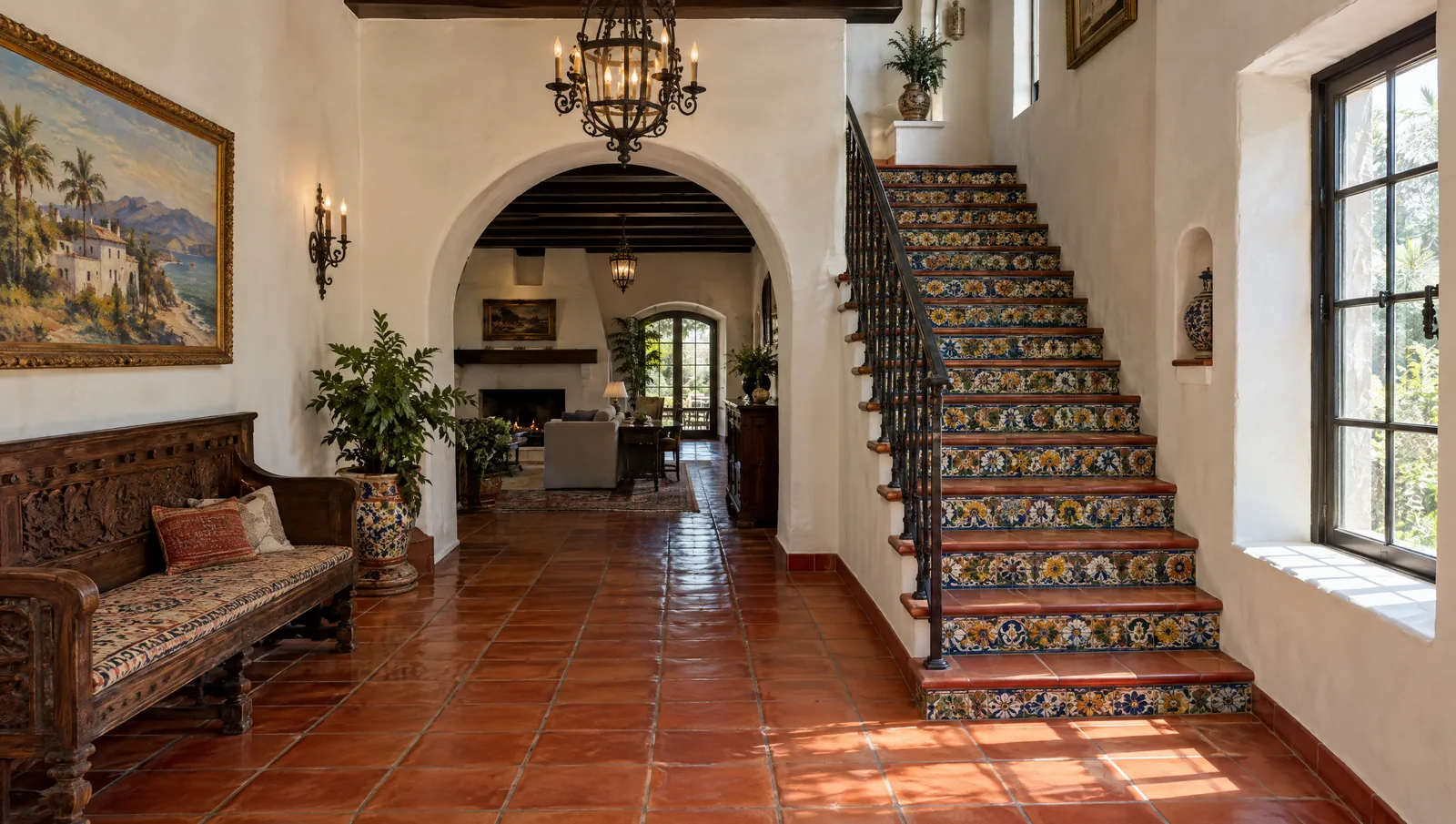
Clay tile floors belong in Santa Barbara the way red tile roofs do. When a Saltillo or terracotta floor turns orange, cloudy or patchy, the problem is almost always the finish on top of the tile, not the tile itself. We remove what has failed and keep the character that took decades to earn.
Does your floor need this?
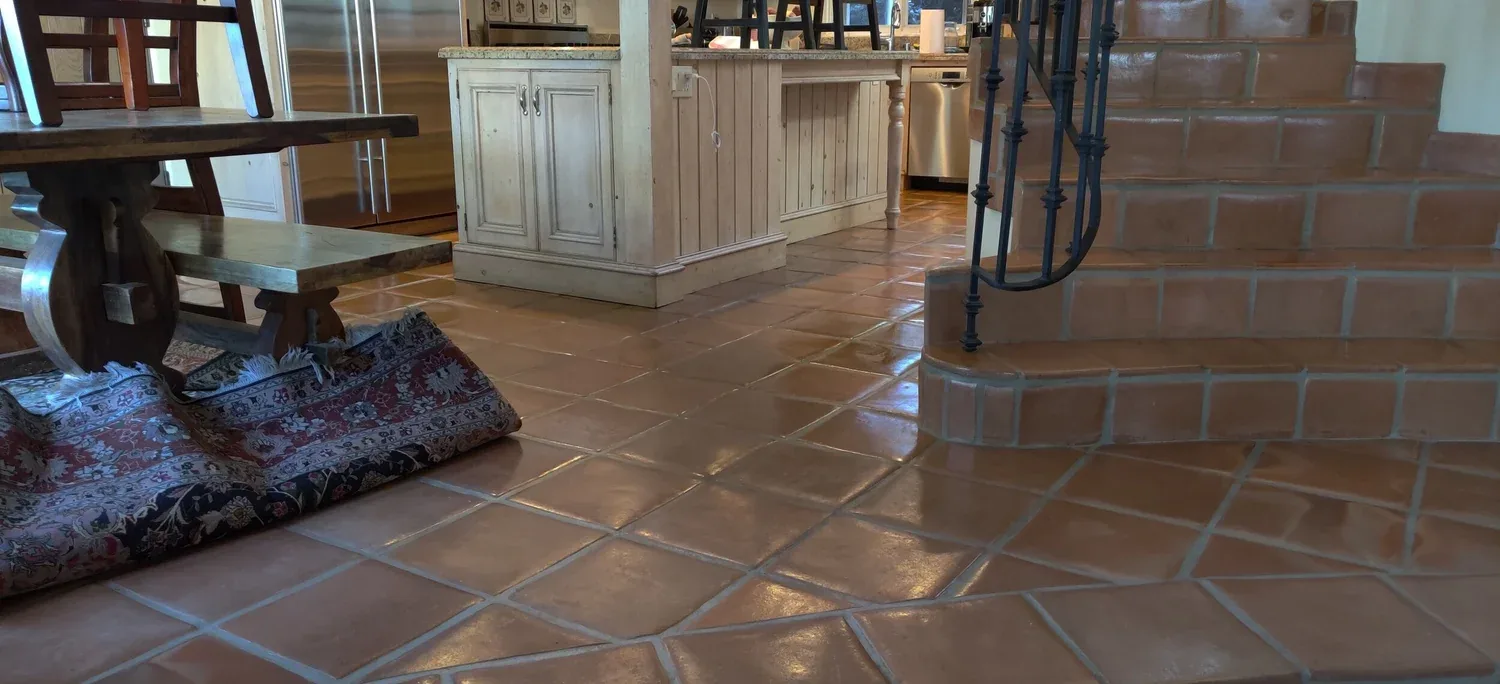
- A white, milky or cloudy haze across tiles or in patches
- Yellow or orange discoloration from aging wax or sealer
- Peeling, flaking or sticky finish, especially near doors
- Dirt trapped in the coating that mopping will not remove
- Worn, bare traffic lanes next to glossy areas along the walls
- Grout lines darker than the tile and getting worse
A city rebuilt in Spanish Colonial Revival
After the earthquake of June 29, 1925 damaged much of downtown, Santa Barbara chose to rebuild in the Spanish Colonial Revival style, and the city appointed an Architectural Board of Review that same summer, one of the earliest in the country. A century later that look still defines the city, from homes on the Riviera and the Upper East to San Roque, Samarkand and the Mesa.
Clay tile floors are part of that vocabulary. Some homes have original terracotta, some have Saltillo laid in later decades, and many newer homes were designed to continue the tradition. Each behaves a little differently, which is why we identify the tile and its existing coatings before recommending anything.
What Saltillo is, and why it needs protection
Saltillo tile is named for Saltillo, in Coahuila, Mexico, where it is made from local clay, formed, dried in the open air and fired at relatively low temperatures. The result is a soft, unglazed and highly porous tile with natural variation: color shifts, edges that are not perfectly square, and occasionally marks left during drying.
That porosity means Saltillo absorbs stains readily, so it is almost always sealed. A common approach is a penetrating sealer followed by topical coats of wax or an acrylic-type finish. Those topical films do much of the protecting, and they are also what wears, yellows and clouds over time.
Patina is worth keeping
A Saltillo floor that has been walked on for decades has softened edges, gentle color shifts and wear that reads as warmth. That patina is the reason many owners love these floors, and it is easy to lose with aggressive sanding or a heavy, glossy new coating.
Our approach is to remove the failing finish and the dirt trapped within it while leaving the clay surface itself as intact as possible. Grinding is reserved for specific problems such as deep damage or severe unevenness, and we discuss it with you before doing it. The goal is a floor that looks cared for, not new. Grout Geek is military-family owned, founded in Ventura in 2018, and our family background in tile installation and tile sales means we respect how these floors were made.
How we strip and reseal
After protecting walls, cabinetry and adjoining floors, we apply a stripper matched to the existing coating, agitate it and extract the dissolved wax or sealer along with the embedded soil. Several passes may be needed where layers of wax have built up over the years. Grout is cleaned at the same time.
The floor then needs to dry thoroughly. Sealing over damp clay is one of the most common causes of the white, milky haze seen on Saltillo, so we do not rush this step. Once dry, we apply a penetrating sealer to protect the clay from within and, if you want a sheen, light topical coats that build to a low, natural luster rather than a high gloss. We will show you sample finishes before we commit.
Keeping it right afterward
Restored Saltillo is easy to live with. Dust mop regularly, damp mop with a pH-neutral cleaner and wipe spills promptly. Skip vinegar, ammonia and harsh degreasers, which can attack grout and soften topical finishes.
Low-sheen topical coats wear first in traffic lanes, and a light maintenance coat when those areas begin to dull is far simpler than a full strip. We leave written care instructions with every job.
Strip what has failed, keep the patina, reseal to a low sheen. Backed by our make-it-right guarantee.
Serving Santa Barbara neighborhoods
- Riviera
- Upper East
- San Roque
- Samarkand
- Mesa
- Hope Ranch
- Downtown Santa Barbara
Careful by design
Stone is unforgiving. The wrong cleaner etches marble, the wrong pad scratches it, the wrong sealer turns terracotta shiny and fake. Every project starts with understanding the surface.
Test the existing wax or sealer
Strip old coatings in controlled sections
Deep clean and extract clay and grout
Dry the floor fully before sealing
Reseal in thin coats to your chosen sheen
Real Grout Geek projects
Photos from our own jobs, not stock.
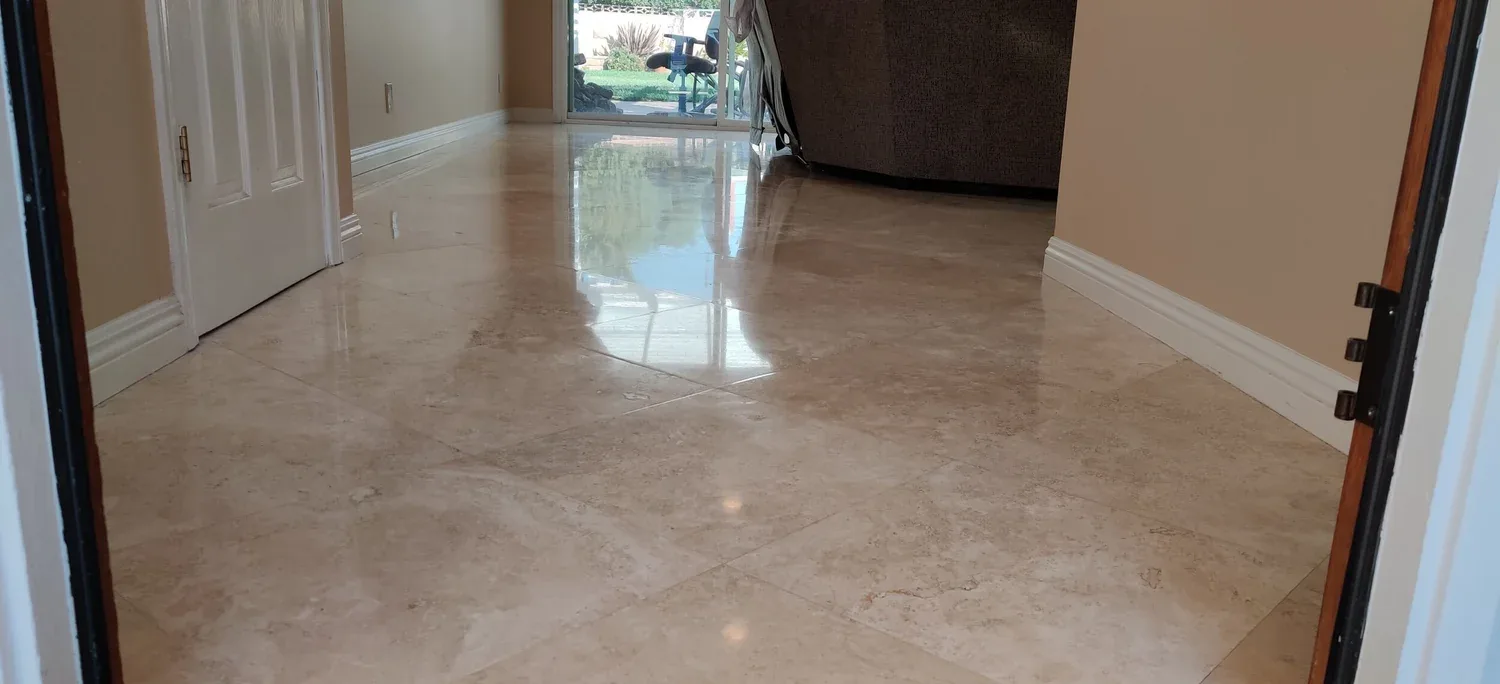
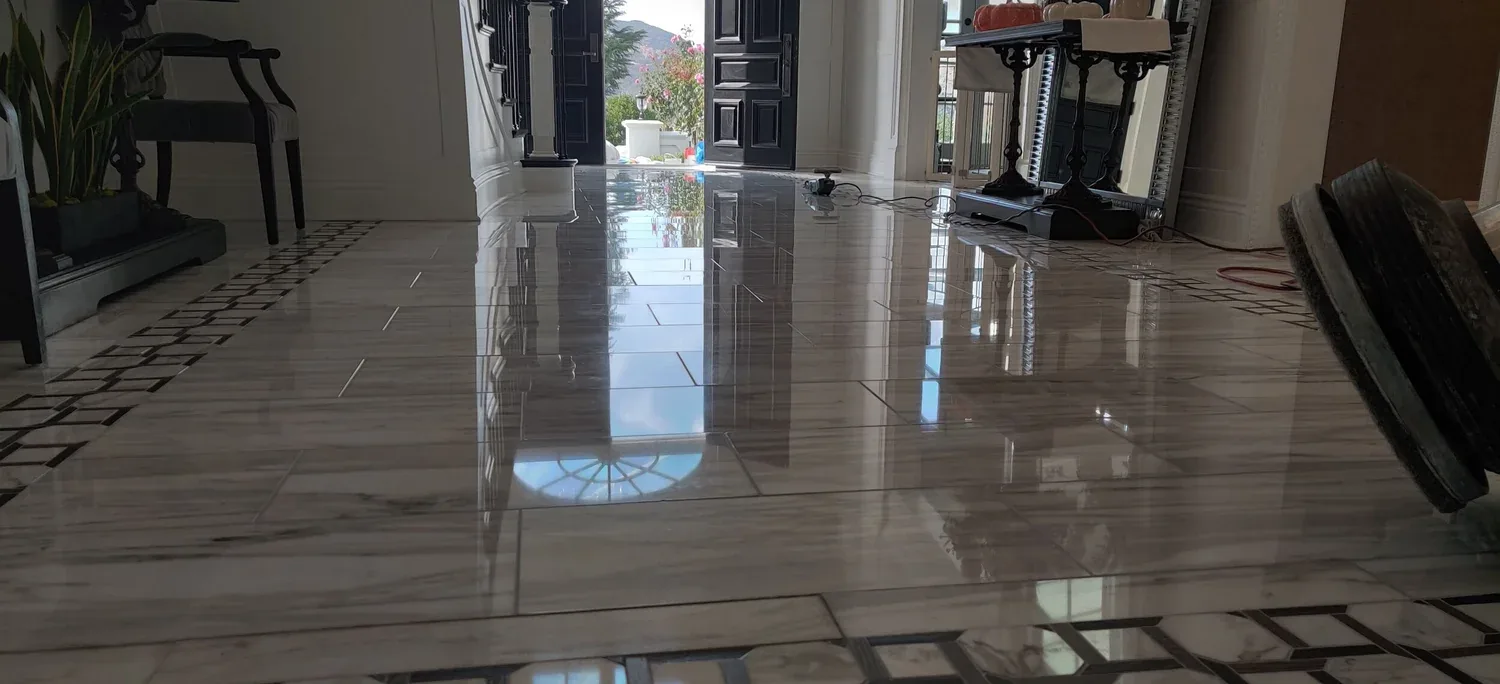
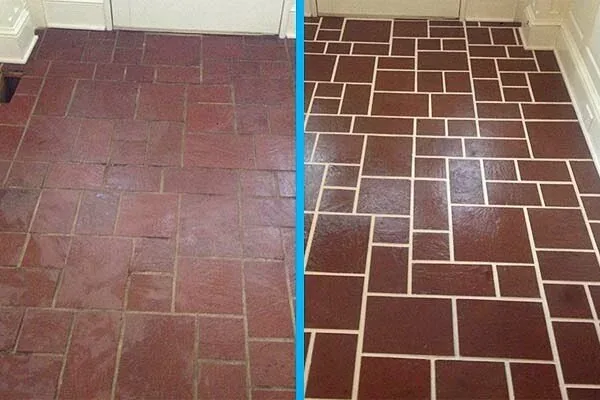
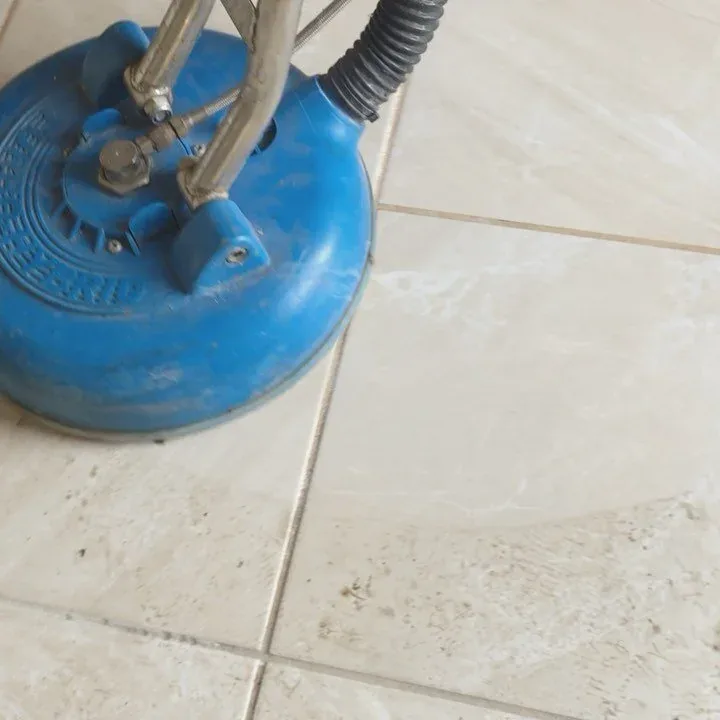
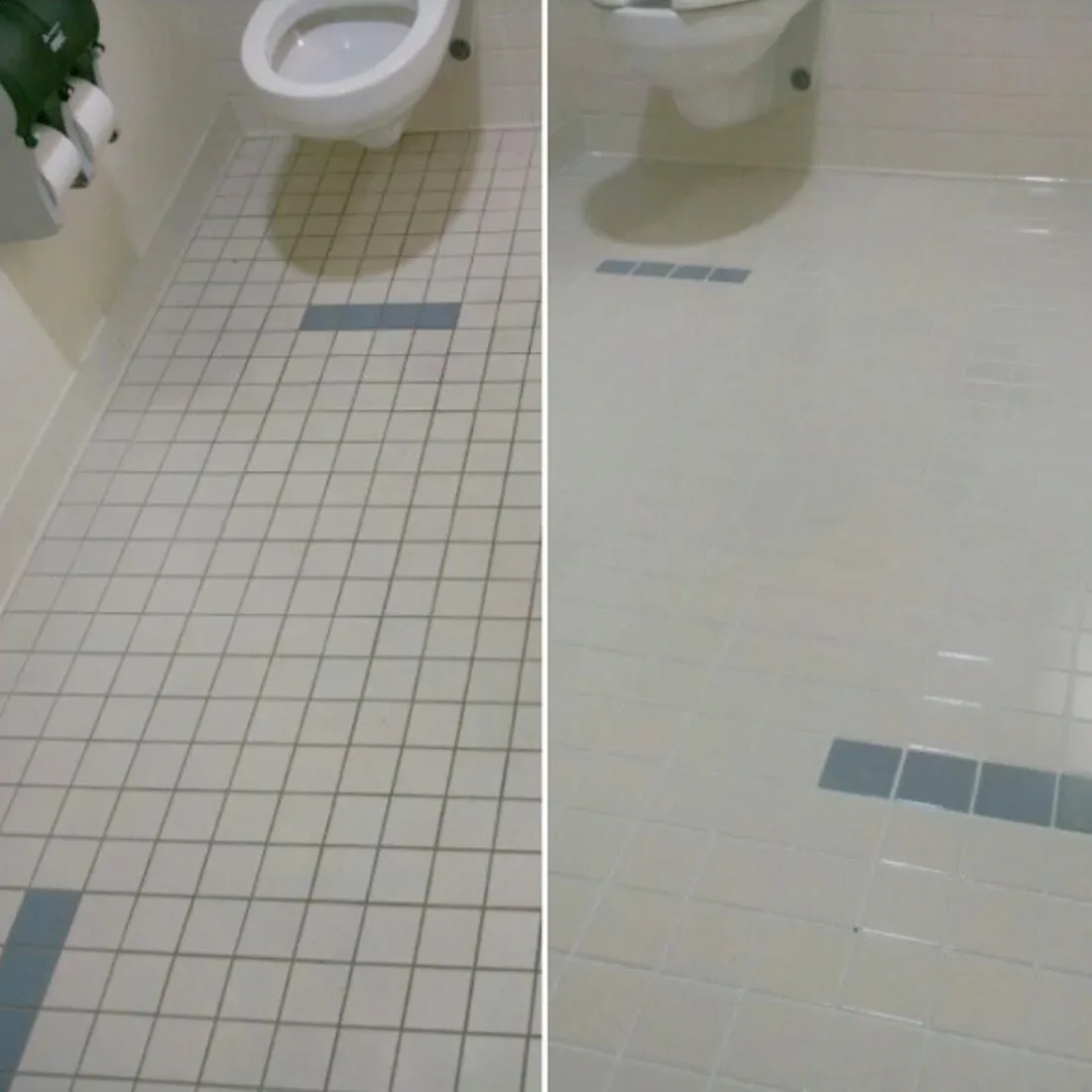
Real Grout Geek projects. View the portfolio
Our make-it-right guarantee
We walk the finished work with you before we leave. If any area isn't right, tell us and we'll come back and make it right at no charge. That's the standard we hold ourselves to on every floor.
Saltillo & Terracotta Restoration in Santa Barbara: questions
 Still curious? Ask a Geek by text, or call (805) 628-2011.
Why does my Saltillo floor look white or cloudy?
The usual cause is moisture trapped under a topical finish, either because the tile was sealed before it was fully dry or because water has worked under a worn coating. Mineral salts carried to the surface, known as efflorescence, and buildup of wax or cleaner residue can cause a similar look. The fix is to strip the coating, let the tile dry thoroughly and reseal with a breathable system.
Will stripping remove the character of my old floor?
No. Stripping removes the coating and the trapped dirt, not the clay. Worn edges, color variation and the marks of age remain. We avoid grinding unless there is a specific reason for it and you have agreed to it.
Can you match a low-sheen look rather than a glossy one?
Yes. The sheen comes from the topical coats, so we control it by the type and number of coats applied. Many Santa Barbara homeowners prefer a soft, low luster that suits Spanish Colonial Revival interiors, and we can show you samples first.
What does Saltillo restoration cost in Santa Barbara?
We do not publish prices, because the work varies widely from floor to floor. The main factors are square footage, how many layers of wax or sealer need to be removed, whether there is efflorescence or moisture to address, the condition of the grout, the finish you choose and furniture moving. A free on-site or photo-based estimate gives you a clear figure.
Do you work on terracotta that is not Saltillo?
Yes. We restore Saltillo, other Mexican terracotta and European-style clay tile. Because these tiles differ in density and finish, we test cleaning and sealing on a small area before treating the whole floor. Call (805) 628-2011 to schedule.
About this service
Free saltillo & terracotta restoration estimate in Santa Barbara
Tell us about the surface and send a few photos. We'll recommend a plan and schedule a free on-site visit to confirm it, with a written estimate and no pressure.