



Travertine restoration in Westlake Village
Westlake Village has a lot of travertine, much of it laid during the Mediterranean building and remodeling wave of the 1980s through the 2000s. Twenty or thirty years on, those floors tend to fail the same way: open pits, dull traffic lanes and grout that has gone gray. All of it can be corrected without replacing a single tile.
Does your floor need this?
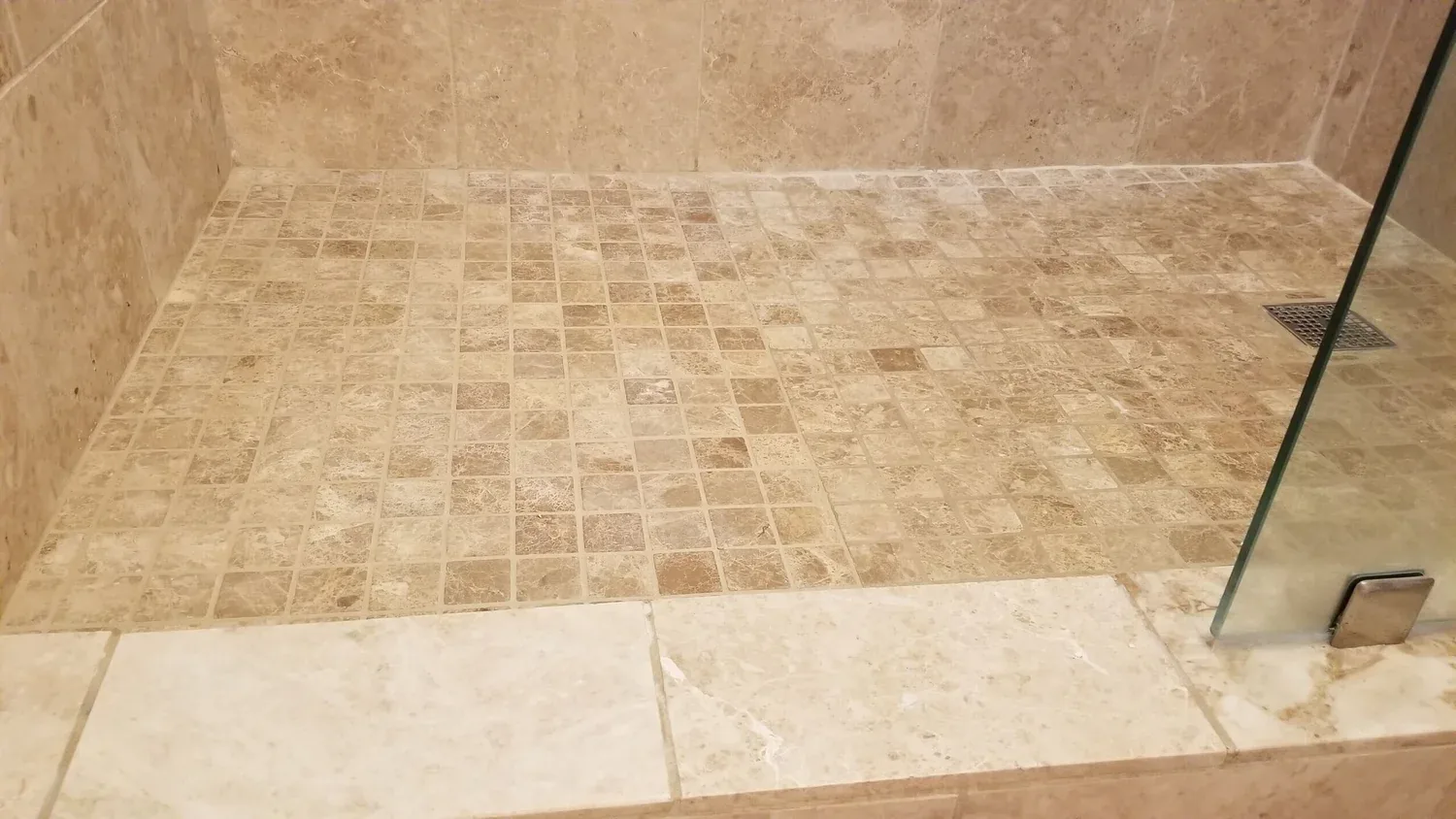
- Small holes and pits that collect dirt and look like dark specks
- Dull, cloudy traffic lanes from the entry, kitchen or patio door
- Light, rough-feeling spots where citrus, wine or cleaners have etched the stone
- Old fill that has cracked, shrunk or turned a different color than the stone
- Grout lines that stay gray no matter how often they are mopped
- Uneven sheen, with some tiles shiny and others flat
Why so many Westlake floors are travertine
Westlake Village began as a master-planned community in the 1960s, laid out around a man-made lake that was completed in 1969. The earliest tracts, including the First Neighborhood and the homes on Westlake Island, date to the late 1960s and 1970s. Three Springs followed in the 1980s and 1990s, and the custom homes of North Ranch went up from the late 1970s into the 2000s, many of them in a classic Mediterranean style. Just over the hill, Lake Sherwood grew into a gated golf community after 1984.
Travertine suited that Mediterranean look, and it became a common choice both for new construction and for remodels of the older homes. That is why it shows up everywhere from lake-view great rooms to North Ranch entries. The community also crosses a county line: the City of Westlake Village sits in Los Angeles County, while roughly two-thirds of the greater Westlake area is part of Thousand Oaks in Ventura County. We serve both sides.
What actually goes wrong with aging travertine
Travertine forms from calcium carbonate deposited by mineral springs, and the gas and water trapped during that process leave natural voids. Floor tile is usually filled at the factory with a cement or resin filler, then honed flat. Over decades, foot traffic, mopping and normal movement in the house wear down and loosen those factory fills. The result is the pitted look many homeowners notice first: small holes that collect dirt and read as dark specks across the floor.
Because travertine is calcium carbonate, it also reacts to acids the same way marble does. Citrus, wine, vinegar-based cleaners and many bathroom products leave dull etch marks. Add grit tracked in from patios and pool decks, which wears the finish in traffic lanes, and a floor that once had an even satin glow ends up patchy and flat.
How we restore it: fill, hone, polish
Grout Geek is a military-family owned company founded in Ventura in 2018, with family roots in tile installation, stone fabrication and stone warehousing. We start every job by confirming what the stone is and how it was originally finished, since travertine sold as honed, polished or tumbled each calls for a different approach. Furniture is moved, baseboards and cabinets are masked, and adjoining carpet and wood are protected before any water touches the floor.
Next we clean out the open voids and fill them with a filler tinted to match the surrounding stone. Travertine is not one color, so matching is done by eye against your actual tiles, not from a chart. Once the fill cures, diamond honing takes the floor down past etching, scratches and excess filler so the surface is flat and uniform. From there we stop at a honed matte, take it to a soft satin, or continue to a polish, depending on what you want and what the stone will hold. A penetrating sealer goes on last to slow staining.
Grout lines are cleaned at the same time. If they are stained beyond cleaning, we can color seal them so the joints read clean and consistent against the restored stone.
Restoring before you list
Floors take up a large share of almost every listing photo, and a pitted, dull travertine floor can make a well-kept home look tired. Restoration is often a practical alternative to replacement before a sale: the stone, the layout and the transitions stay the same, and the floor simply looks the way it did when it was installed.
If you are on a listing timeline, tell us your photo and open-house dates when you reach out. A photo-based estimate is usually the quickest way to get started, and we will be clear about what fits the schedule, including how long the fill needs to cure and when the floor can take normal traffic again.
Honed or polished for a Westlake great room?
Many Westlake homes open straight from the kitchen and great room to a patio or pool. In those spaces a honed or satin finish usually makes more sense: it hides minor etching, wears more evenly and offers better traction when the floor is wet. A higher polish suits formal entries, dining rooms and living spaces that see less water and less grit.
There is no need to guess. We can refine a small test area so you can see the difference on your own floor, in your own light, before committing to a finish for the whole room.
Color-matched hole filling, diamond honing and a finish chosen for how you actually use the room, backed by our make-it-right guarantee.
Serving Westlake Village neighborhoods
- First Neighborhood
- Westlake Island
- Three Springs
- North Ranch
- Lake Sherwood
Careful by design
Stone is unforgiving. The wrong cleaner etches marble, the wrong pad scratches it, the wrong sealer turns terracotta shiny and fake. Every project starts with understanding the surface.
Identify the travertine finish and condition
Deep clean stone and grout
Fill open holes with color-matched filler
Hone flush and refine to your chosen finish
Seal and leave a care guide
Real Grout Geek projects
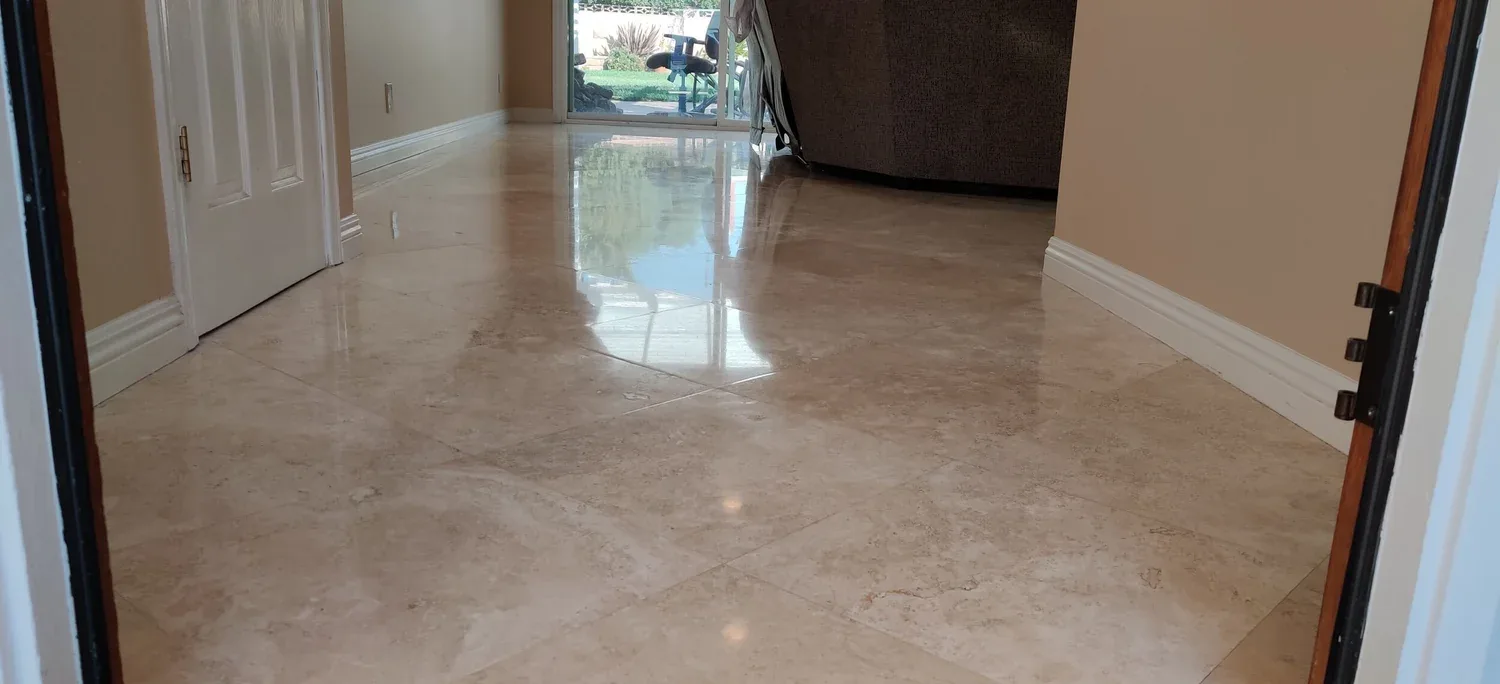
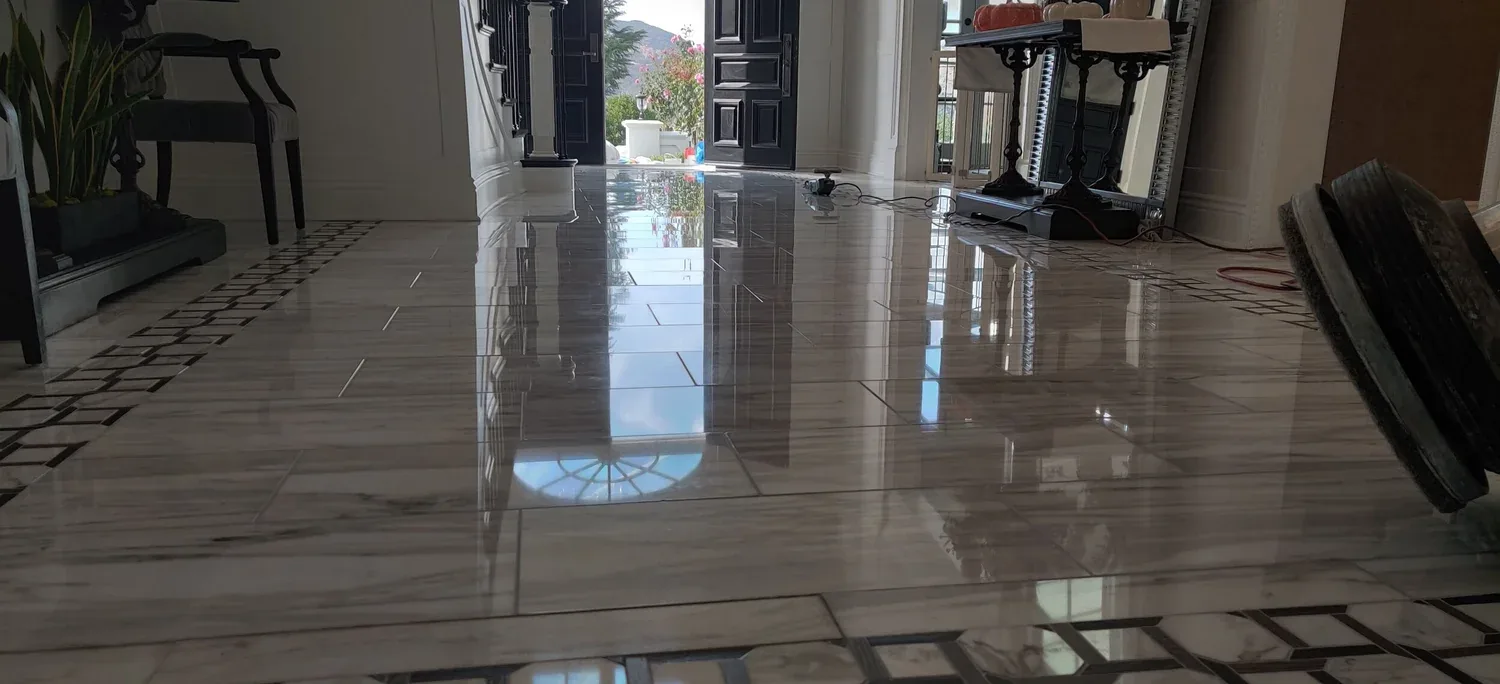
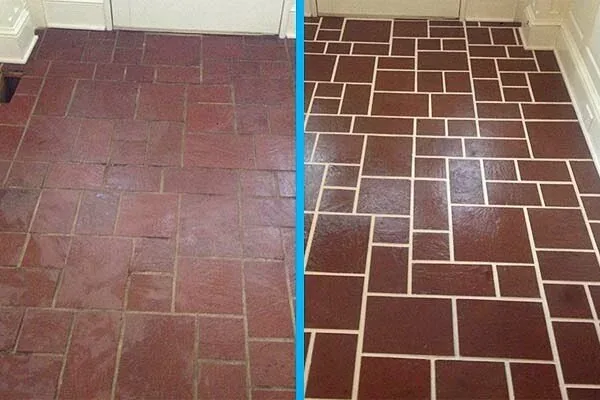
Photos from our own jobs, not stock.
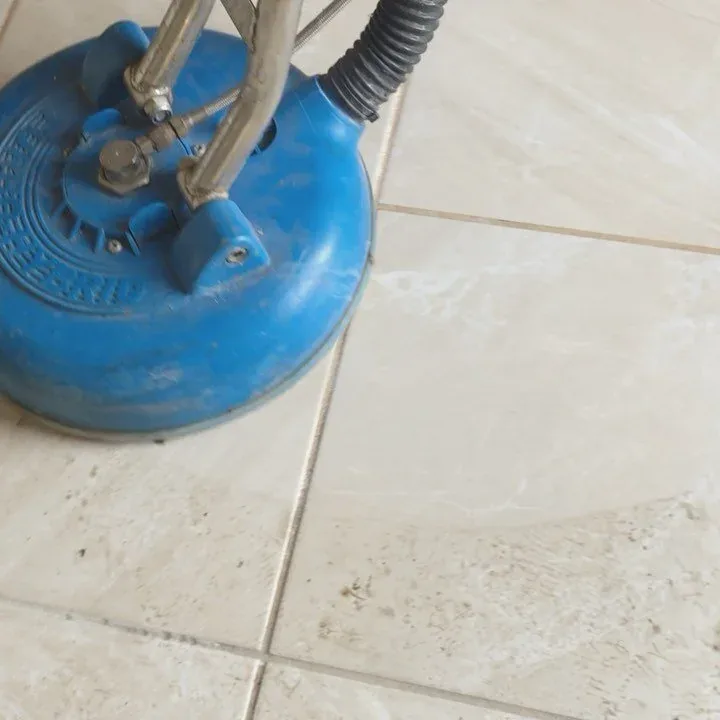
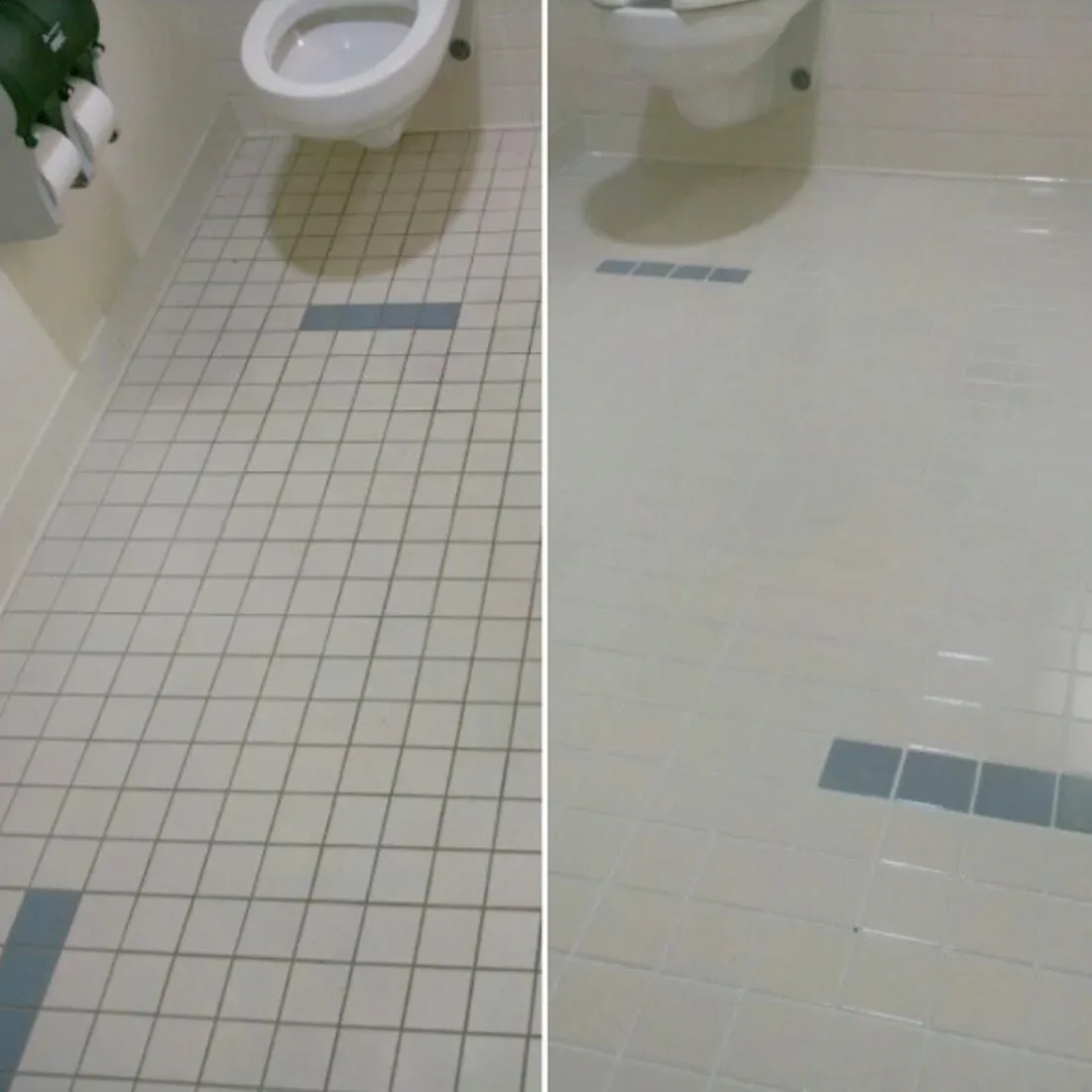
Real Grout Geek projects. View the portfolio
Our make-it-right guarantee
We walk the finished work with you before we leave. If any area isn't right, tell us and we'll come back and make it right at no charge. That's the standard we hold ourselves to on every floor.
Travertine Restoration in Westlake Village: questions
 Still curious? Ask a Geek by text, or call (805) 628-2011.
Can you fill the holes in my travertine floor without replacing tiles?
Yes. Open voids are cleaned out and filled with a filler tinted to match your stone, then honed flush so the repair sits level with the surface. Done properly, the filled areas blend with the natural variation in the stone rather than standing out as patches.
Will the floor look new, or still look like travertine?
It will still look like travertine, just restored. Restoration removes damage and evens out the finish, but the natural color movement and character of the stone stay. If you prefer the open, rustic look of unfilled travertine, we can talk about leaving some texture.
How much does travertine restoration cost in Westlake Village?
We do not publish set pricing because the cost depends on the floor itself: the square footage, how many voids need filling, the depth of etching and wear, the finish you choose, the condition of the grout, and how much furniture moving and protection the job requires. A free on-site visit or a photo-based estimate gives you a clear quote for your specific floor.
How long does it take, and can we stay in the house?
Most homeowners stay in the house while we work, with the affected rooms closed off. The timeline depends on the size of the area and how much filling is needed, since fill has to cure before honing. We will give you a realistic schedule at the estimate, including when the floor can take normal traffic.
Do you work in both the Los Angeles County and Ventura County parts of Westlake?
Yes. We serve the City of Westlake Village, the Westlake neighborhoods within Thousand Oaks, and nearby Lake Sherwood. Call (805) 628-2011 or send photos for an estimate.
Free travertine restoration estimate in Westlake Village
Tell us about the surface and send a few photos. We'll recommend a plan and schedule a free on-site visit to confirm it, with a written estimate and no pressure.